Winter Haven, FL Restoration Services
Water Damage Restoration in Winter Haven, FL
Water damage restoration services for homes and businesses in Winter Haven, FL — from water removal and extraction through structural drying.
Water damage in a Winter Haven property can result from plumbing leaks, burst pipes, appliance supply-line failures, water heater leaks, roof leaks, overflowing fixtures, storm-driven rain, or other sources of unwanted water. Onsite Mitigation and Restoration Inc helps property owners address the full range of water intrusion situations, from a slow hidden leak to widespread flooding across multiple rooms.
The goal of water damage restoration is straightforward: stop or limit additional damage, remove excess water, manage remaining moisture, dry affected materials, and prepare the property for restoration or repair. Whether the loss involves a single room or a larger area of the structure, addressing water promptly can help limit how far moisture migrates into surrounding building materials.
Water Damage Cleanup and Mitigation Near Winter Haven
Water damage restoration is the process of addressing unwanted water inside a property, removing excess moisture, drying affected materials, cleaning damaged areas where appropriate, and preparing the structure for restoration. It combines several connected phases — water mitigation, water extraction, moisture management, structural drying, and affected-material evaluation — rather than a single action.
When water enters a home or business, it rarely stays in one place. Moisture can move beneath flooring, into drywall, behind baseboards, inside wall cavities, and into cabinetry and other porous building materials. Some of this migration is visible, but a meaningful portion happens out of sight. That is why water mitigation focuses not only on the water you can see but on identifying and addressing moisture that may remain behind after the obvious water is gone.
Onsite Mitigation and Restoration Inc approaches water damage as a staged process. First, the source and extent of the water are evaluated. Then excess water is removed, remaining moisture is assessed, and drying and dehumidification are directed at the affected materials. Finally, damaged materials are evaluated and the property is prepared for the next restoration steps. The exact approach depends on the source of the water, how much entered the property, and which materials became wet.
What is water damage restoration?
Common Causes and Signs of Water Damage in Winter Haven Properties
Common Sources of Water Damage
Water damage in Winter Haven homes and businesses can originate from a wide range of sources. Plumbing leaks and burst pipes are among the most frequent, particularly when supply lines, fittings, or aging plumbing fail. Appliance supply-line failures — including dishwasher, refrigerator, and washing machine hoses — can release a surprising amount of water in a short time. Water heater leaks and failures often affect the surrounding flooring and drywall before they are noticed.
Roof leaks and wind-driven rain can allow water to enter through the roof, ceilings, and walls, especially during Central Florida thunderstorms and tropical weather. Overflowing sinks, tubs, and fixtures, along with HVAC-related moisture issues, can also contribute to unwanted water inside a property. In some cases, water migrates slowly through hidden areas for days or longer before visible signs appear.
Warning Signs to Watch For
Because water can travel behind walls and beneath flooring, the visible signs often appear some distance from the actual source. Common warning signs include staining or discoloration on ceilings and walls, swollen or buckling flooring, soft or crumbling drywall, peeling paint, damp or musty odors, and visible standing water. Warped trim, damp baseboards, and unusually humid indoor conditions can also point to hidden moisture.
Any of these signs warrant a closer look. Water that remains in building materials can continue to spread and affect surrounding areas, which is why identifying and addressing the full extent of moisture — not only the obvious water — is a central part of water damage restoration.
How Water Damage Restoration Works
Depending on the source and extent of damage, the water restoration process may include the following steps. Not every property follows an identical sequence, and the approach is adjusted based on conditions found on site.
Initial Damage Evaluation
The affected areas are inspected to understand the source of the water, how far it has spread, and which materials are involved. This helps determine the appropriate mitigation approach.
Address the Water Source
Where possible and appropriate, the source of the water is identified so that further intrusion can be limited. Some sources, such as a plumbing failure, may require a plumbing professional to repair.
Remove Standing or Excess Water
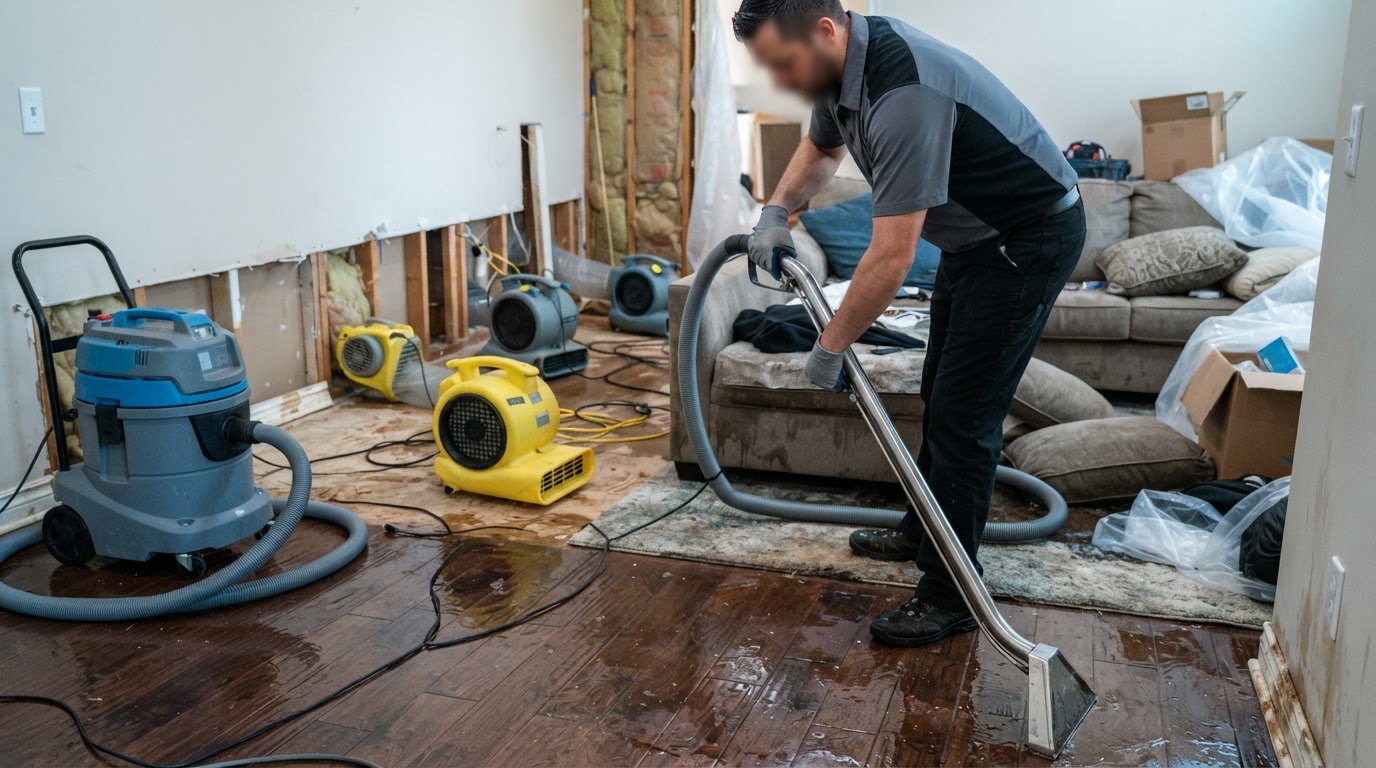
Visible water is extracted from flooring and affected surfaces so that drying can begin. Removing excess water promptly can help limit how much moisture absorbs into surrounding materials.
Evaluate Moisture Migration
Moisture is assessed in areas that may not show visible water, including beneath flooring, behind baseboards, and inside wall cavities, to identify the full scope of affected materials.
Dry and Dehumidify
Air movement and dehumidification are directed at the affected materials to reduce remaining moisture. Drying time varies based on the amount of water, the materials involved, and environmental conditions.
Clean Up and Prepare for Restoration
Affected materials are evaluated, and the property is prepared for the next restoration or repair steps based on the condition of the structure and its contents.
Water damage at your property? Call our Winter Haven restoration team.
Call 863-347-3029Professional Water Damage Restoration in Winter Haven
Addressing hidden moisture is one of the most important reasons to involve a restoration company after water damage. Even after standing water is removed, moisture can remain inside drywall, subflooring, framing, and wall cavities. Left unaddressed, that residual moisture can continue to migrate and affect surrounding materials, potentially complicating the restoration process.
In Winter Haven and across Central Florida, warm temperatures and high humidity can influence how materials dry and how moisture behaves inside a structure. Professional water damage restoration focuses on identifying the full extent of moisture, directing drying at the affected materials, and preparing the property for the next steps — rather than simply removing the visible water and stopping there.
Property owners may choose to document visible damage and contact their insurance carrier to understand applicable coverage and claim requirements. Onsite Mitigation and Restoration Inc can help with the mitigation and drying side of the loss. For related situations, see our emergency water removal and extraction services, flood damage cleanup, burst pipe and plumbing leak cleanup, structural drying and dehumidification, and roof leak, ceiling and wall water damage cleanup.
Serving Winter Haven
From Winter Haven to homes and businesses across surrounding Polk County and Central Florida communities, Onsite Mitigation and Restoration Inc provides access to water, fire, smoke, storm and related restoration services.
863-347-3029Water Damage Restoration FAQs
How quickly should water damage be addressed?+
Water damage should be addressed as quickly as possible. The longer water and moisture remain in building materials, the more opportunity there is for moisture to migrate into surrounding areas. Prompt water removal and drying can help limit the extent of affected materials and support the overall restoration process.
What is the difference between water mitigation and water restoration?+
Water mitigation focuses on stopping or limiting additional damage — removing excess water, managing moisture, and stabilizing the property. Water restoration is the broader process of returning the property to its pre-loss condition, which may include repairs and reconstruction. Mitigation generally comes first, and restoration follows once the property is stabilized and dry.
Can water travel underneath flooring?+
Yes. Water can migrate beneath hardwood, laminate, tile, and carpet, reaching the subfloor and padding below. Because flooring can mask trapped moisture, the area beneath it is evaluated as part of a thorough water damage assessment rather than relying only on what is visible on the surface.
Can water damage exist behind drywall?+
Water can enter wall cavities through leaks, condensation, or migration from adjacent wet areas, and it may remain behind drywall after the visible water is gone. Damp baseboards, staining, or soft spots can be indicators. Affected wall cavities are assessed to determine whether moisture is present where it cannot be seen.
What happens during water extraction?+
Water extraction is the physical removal of standing or excess water from the affected property using extraction equipment. It focuses on pulling water out of flooring and saturated materials so that drying and dehumidification can begin. Extraction is typically one of the first active steps after the source and extent of the water are evaluated.
How long does structural drying take?+
There is no single drying duration. Drying time depends on how much water entered the property, which materials became wet, how deeply moisture migrated, and the indoor environmental conditions. Some situations dry within a few days, while others require longer. Drying progress is monitored and the timeline adjusted based on actual conditions.
Should I remove wet materials myself?+
Removing wet building materials involves considerations around moisture assessment, contamination, and structural condition. Rather than removing materials on your own, it is generally best to have affected areas evaluated by a restoration professional so that only appropriate materials are removed and the drying process is not disrupted.
Do you provide water damage restoration outside Winter Haven?+
Onsite Mitigation and Restoration Inc provides water damage restoration in Winter Haven and serves multiple surrounding Central Florida communities. If your property is outside Winter Haven, contact our team to discuss your location and restoration needs.
Need Water Damage Restoration in Winter Haven?
Contact Onsite Mitigation and Restoration Inc to discuss your property and next-step restoration needs. Our team is ready to help you take the next step.
Request Restoration Help
Tell us about your property and the damage. We'll review your request and reach out.