Winter Haven, FL Restoration Services
Storm & Hurricane Damage Restoration in Winter Haven, FL
Storm and hurricane damage restoration in Winter Haven, FL — coordinating roof tarping, board-up, water extraction, drying, and property stabilization after severe weather.
Storm damage can create multiple problems at once — roof damage, wind-driven rain, broken openings, ceiling water damage, and exterior exposure all occurring in a single event. Onsite Mitigation and Restoration Inc helps Winter Haven property owners address the combined effects of storm and hurricane damage through coordinated mitigation and restoration.
Because storm losses often involve several types of damage simultaneously, the response may combine temporary property protection, water extraction, structural drying, and cleanup. The goal is to stabilize the property, limit additional damage, and prepare for restoration — whether the loss stems from a thunderstorm, tropical weather, or a larger hurricane event.
Storm Damage Restoration for Winter Haven Properties
Storm damage restoration is the process of addressing the combined effects severe weather has on a property. Unlike a single-source water loss, storm damage often involves roof damage, wind exposure, broken windows and doors, rain intrusion, and interior water damage all at once. The restoration process must address each of these concerns in a coordinated sequence.
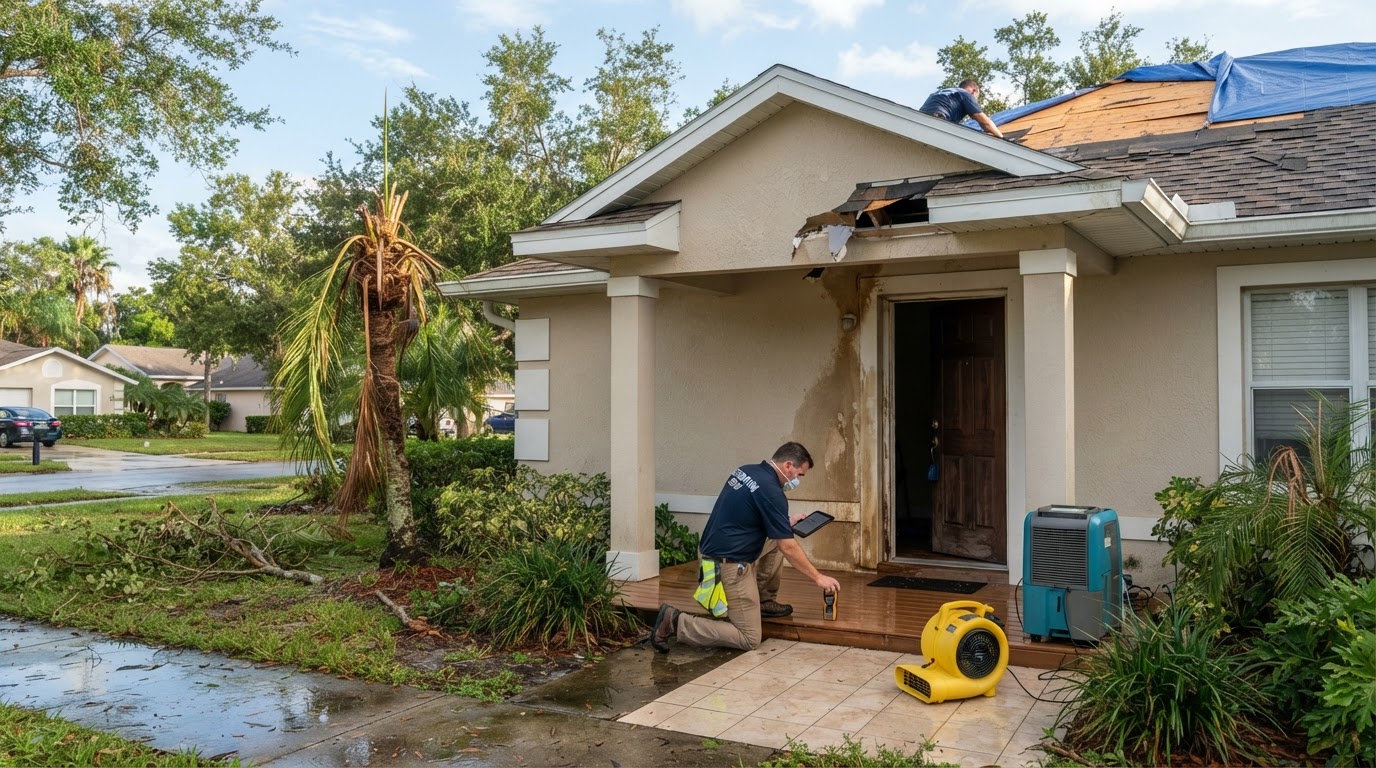
The first priority is typically stabilization — temporarily protecting exposed areas so that additional rain and wind do not cause further damage. That may involve roof tarping over damaged roof sections and board-up over broken windows and doors. Once the property is stabilized, interior water mitigation can proceed, including water extraction, moisture assessment, and structural drying of affected materials.
Onsite Mitigation and Restoration Inc approaches storm damage as a multi-step effort. The accessible damage is evaluated, immediate exposure points are identified, temporary protection is applied where appropriate, and water and moisture are addressed. Because every storm loss is different, the specific combination of services depends on what the property has actually sustained.
What does storm damage restoration include?
Common Types of Storm and Hurricane Damage
Wind and Roof Damage
High winds can lift and remove roofing materials, damage roof penetrations, and create openings that allow rain to enter. Wind-driven rain can force water beneath roofing materials and into wall cavities even when the roof appears intact from the ground. Roof damage is one of the most common starting points for storm-related interior water damage.
Broken Openings and Rain Intrusion
Wind and debris can break windows and damage doors, creating openings that expose the interior to rain. Once an opening exists, water can travel into ceilings, walls, and flooring, spreading beyond the immediate entry point. Ceiling leaks, wall water damage, and saturated flooring are common consequences of storm-created openings.
Flooding and Interior Water Damage
Heavy rainfall and storm-driven water can lead to interior flooding, particularly when openings or roof damage allow water to enter. Debris impact can also damage exterior surfaces. The resulting water damage may affect flooring, drywall, baseboards, cabinetry, and wall cavities. Not every storm produces visible flooding — wind-driven rain alone can cause significant interior moisture damage without standing water.
How Storm Damage Mitigation and Restoration Works
Because storm losses vary significantly, the mitigation and restoration process is adjusted based on the specific damage present. The following steps represent a general sequence that may be adapted to the property's condition.
Evaluate Accessible Damage
The property is assessed to identify roof damage, broken openings, water intrusion, and other storm-related effects. Accessible areas are evaluated with attention to safety, since storm-damaged structures can present hazards.
Identify Immediate Exposure Points
Areas where additional rain or wind could cause further damage are identified and prioritized. These typically include damaged roof sections and broken windows or doors that expose the interior.
Apply Temporary Protection
Where appropriate, roof tarping and board-up are applied to exposed areas to help limit additional water entry and weather exposure while mitigation proceeds.
Address Standing or Unwanted Water
Water that has entered the property is extracted from flooring and affected surfaces. Removing excess water promptly helps limit how far moisture migrates into surrounding materials.
Dry Affected Areas
Air movement and dehumidification are directed at affected materials to address remaining moisture. Drying time depends on the amount of water, the materials involved, and environmental conditions.
Prepare for Restoration
Once the property is stabilized and dried, affected materials are evaluated and the property is prepared for the next restoration or repair steps based on the full scope of storm damage.
Storm damage at your property? Call our Winter Haven restoration team.
Call 863-347-3029Storm Restoration Services Near Winter Haven and Polk County
Central Florida's climate brings regular thunderstorms, heavy rain, wind, and tropical weather, all of which can damage properties in Winter Haven and across Polk County. Storm restoration in this region frequently involves a combination of roof protection, opening security, and interior water mitigation — because the same storm event that damages a roof often drives water inside at the same time.
Coordinating these services matters. Tarping a damaged roof without addressing the water that already entered, or boarding up a broken window without drying the saturated flooring beneath it, can leave related damage unresolved. Onsite Mitigation and Restoration Inc evaluates the full scope of storm damage so that temporary protection and interior mitigation are addressed together.
Related services include emergency roof tarping, emergency board-up, water damage restoration, water extraction, flood damage cleanup, structural drying, and roof leak water damage cleanup.
What should I do after storm damage to my property?
Serving Winter Haven
From Winter Haven to homes and businesses across surrounding Polk County and Central Florida communities, Onsite Mitigation and Restoration Inc provides access to water, fire, smoke, storm and related restoration services.
863-347-3029Storm & Hurricane Damage FAQs
What should I do immediately after storm damage?+
Prioritize safety first. Avoid damaged electrical or structural areas, keep people away from unsafe sections, and document visible damage when it is safe to do so. Then contact appropriate professionals to evaluate temporary protection such as tarping or board-up and any water mitigation needs. Avoid climbing onto damaged roofs or entering areas with standing water near electrical sources.
Can wind damage lead to interior water damage?+
Yes. Wind can lift roofing materials and force rain beneath them, or break windows and doors that expose the interior. Even without visible flooding, wind-driven rain can travel into ceilings, walls, and wall cavities, causing interior moisture damage that may not be immediately obvious.
When is roof tarping needed after a storm?+
Roof tarping is needed when a storm has damaged roofing materials or created openings that allow rain to enter. Missing shingles, debris impact, visible roof damage, or an active interior leak after a storm all indicate that temporary tarping may be appropriate to help limit additional water intrusion.
When should windows or doors be boarded up?+
Broken windows and damaged doors should be boarded up as soon as possible after storm damage, particularly when rain or severe weather continues. Board-up helps reduce additional weather exposure and limits further water entry through the damaged openings until permanent repairs can be made.
Can storm water travel behind walls?+
Yes. Water entering through a damaged roof or broken opening can migrate into wall cavities, along framing, and into adjacent rooms. The visible damage may not reveal the full path of moisture, which is why a thorough moisture assessment is part of storm damage restoration.
Can a storm damage property even without visible flooding?+
Yes. Wind-driven rain can enter through roof damage or small openings and cause significant interior moisture damage without producing standing water. Ceiling stains, damp walls, and musty odors after a storm can indicate water intrusion even when no flooding is visible.
What restoration services are used after hurricane damage?+
Hurricane damage often requires a combination of roof tarping, board-up, water extraction, structural drying, and cleanup. Because hurricanes can cause widespread damage across multiple areas of a property, the restoration process is coordinated to address each type of damage in the appropriate sequence.
Do you provide storm restoration outside Winter Haven?+
Onsite Mitigation and Restoration Inc provides storm damage restoration in Winter Haven and serves multiple surrounding Central Florida communities. If your property is outside Winter Haven, contact our team to discuss your location and restoration needs.
Need Storm Damage Restoration in Winter Haven?
Contact Onsite Mitigation and Restoration Inc to discuss your property and next-step restoration needs. Our team is ready to help you take the next step.
Request Restoration Help
Tell us about your property and the damage. We'll review your request and reach out.