Winter Haven, FL Restoration Services
Roof Leak, Ceiling & Wall Water Damage Cleanup in Winter Haven, FL
Roof leak, ceiling and wall water damage cleanup in Winter Haven, FL — addressing the interior moisture damage that results from roof and overhead leaks.
A roof leak can allow water to migrate into attics, ceilings, insulation, walls, drywall, flooring, and cabinetry before it ever appears as a visible stain inside the living space. Onsite Mitigation and Restoration Inc helps Winter Haven property owners address the interior water damage that results from roof and overhead leaks.
This page focuses on the interior water damage caused by roof leaks — water cleanup, moisture assessment, and structural drying of affected ceilings, walls, and flooring. Stopping or repairing the roof source itself is a separate concern that may require a roofing professional, while the restoration company addresses the water and moisture damage inside the property.
Water Damage From Roof, Ceiling and Wall Leaks
When water enters through a damaged roof, it rarely stays in one place. Moisture can travel along structural materials, through attic insulation, across ceiling drywall, and down into wall cavities before appearing as a visible stain or drip. By the time a ceiling stain is noticed, water may have spread across a wider area than the stain suggests.
This hidden migration is what makes roof leak water damage distinct from a simple surface spill. The visible stain marks where water has accumulated enough to show, but the moisture path may extend into adjacent ceiling sections, down interior walls, behind baseboards, and into the flooring beneath. A thorough assessment evaluates these hidden areas rather than relying only on what is visible.
Onsite Mitigation and Restoration Inc approaches roof leak water damage by first identifying the affected interior areas, then addressing standing water where present, evaluating moisture in ceilings, walls, and floors, and directing drying at the affected materials. The roof source itself is a separate matter — if the leak is ongoing, a roofing professional may be needed to correct the defect before interior drying can fully succeed.
How does roof leak water damage spread inside a property?
Signs of Roof Leak and Ceiling Water Damage
Visible Signs Inside the Property
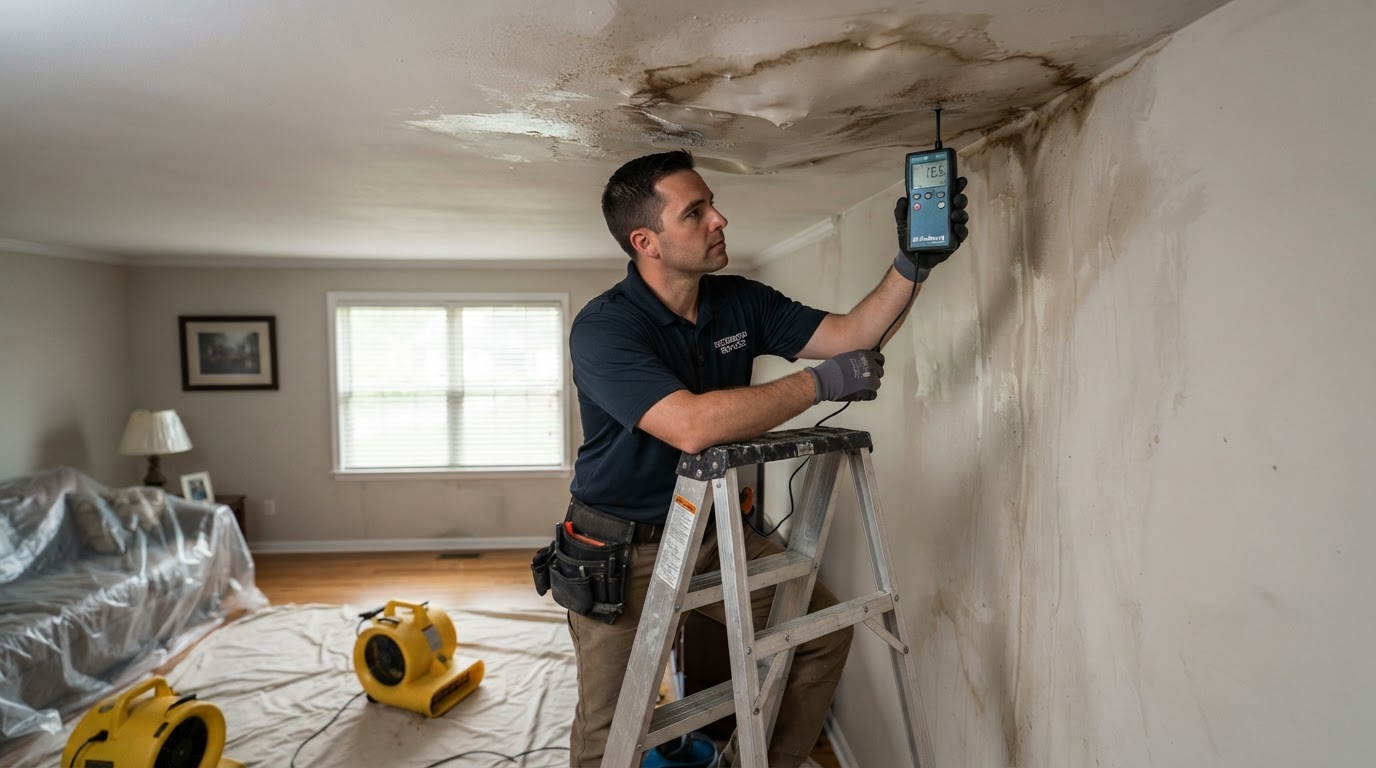
Ceiling discoloration and water stains are the most recognizable signs of a roof leak. Sagging ceiling materials, soft or crumbling drywall, peeling or bubbling paint, and damp walls are also common. Dripping water, swollen trim, and damp baseboards can indicate that moisture has migrated from the roof into the wall cavities below. Flooring that feels damp or soft beneath a suspected leak area may show that water has traveled all the way through the ceiling and wall.
Hidden Moisture and Odor
Not all roof leak damage is visible. Damp insulation in the attic, moisture trapped inside wall cavities, and a musty odor in upper-floor rooms can point to hidden water intrusion. Because water follows the path of least resistance through structural materials, the area of concern inside the property may be offset from the actual roof opening above.
Common Sources
Roof leak water damage can stem from storm roof damage, missing roof materials, wind-driven rain, roof penetrations, and flashing-related leaks. Plumbing located above a ceiling and HVAC condensate issues can also produce similar interior water damage. The exact roofing system condition cannot be diagnosed without inspection, and a roofing professional may be needed to identify and correct the source.
Roof Leak Water Damage Cleanup and Drying Process
Depending on the extent of the leak and which materials are affected, the cleanup and drying process may include the following steps. The approach is adjusted based on conditions found on site.
Identify Affected Interior Areas
Ceilings, walls, flooring, and adjacent areas are assessed to identify where moisture from the roof leak has traveled. Hidden areas such as wall cavities and attic spaces are evaluated, not only the visible stain.
Confirm the Water Source
Where possible, the source of the water is identified. If the leak originates from a roof defect, a roofing professional may be needed to correct the source before interior drying can fully succeed.
Remove Standing Water
Any standing water that has pooled in ceilings, light fixtures, or flooring is removed. Removing excess water promptly helps limit how far moisture absorbs into surrounding materials.
Evaluate Ceiling, Wall and Floor Moisture
Moisture is assessed in drywall, insulation, framing, subflooring, and other affected materials to determine the full scope. Not every wet ceiling can remain in place — material condition determines the appropriate approach.
Dry Affected Materials
Air movement and dehumidification are directed at the affected materials to reduce remaining moisture. Drying time depends on how much water entered, which materials became wet, and environmental conditions.
Prepare for Repair and Restoration
Once materials are dried, affected areas are evaluated for repair or replacement and the property is prepared for the next restoration steps, including any permanent roof repair by the appropriate trade.
Water leaking through your ceiling? Call our Winter Haven restoration team.
Call 863-347-3029Ceiling and Wall Water Damage Cleanup Near Winter Haven
In Winter Haven and across Central Florida, heavy rain, thunderstorms, and tropical weather can stress roofing systems and create opportunities for water intrusion. Once water enters through a roof, warm and humid conditions can influence how materials dry and how moisture behaves inside ceilings and walls. Addressing the interior damage promptly can help limit how far moisture migrates into surrounding materials.
It is important to distinguish between repairing the roof and mitigating the interior damage. A roofing professional corrects the roof defect; a restoration company addresses the water and moisture damage inside the property. Depending on the situation, both services may be needed — and ongoing interior drying is difficult if the roof source has not been controlled.
Related services include water damage restoration, structural drying and dehumidification, emergency roof tarping, storm and hurricane damage restoration, and water extraction.
Do I need a roofer or a water restoration company?
Serving Winter Haven
From Winter Haven to homes and businesses across surrounding Polk County and Central Florida communities, Onsite Mitigation and Restoration Inc provides access to water, fire, smoke, storm and related restoration services.
863-347-3029Roof Leak / Ceiling / Wall FAQs
What should I do when water is leaking through my ceiling?+
Prioritize safety first — avoid areas near electrical fixtures where water is present, and do not use switches or outlets in the affected area. If it is safe to do so, contain the water with buckets and move belongings away from the leak. Then contact a restoration company to address the interior water damage and, if the source is a roof defect, a roofing professional to correct the leak.
Can roof leak water travel inside walls?+
Yes. Water entering through a damaged roof can travel along framing and through wall cavities before appearing as a visible stain. Damp baseboards, soft drywall, or staining on walls below a roof leak can indicate that moisture has migrated beyond the ceiling into the wall structure.
Does a ceiling stain mean the area is still wet?+
Not necessarily. A ceiling stain shows where water has been, but it does not confirm whether the area is still wet or has dried. Moisture assessment is used to determine whether residual moisture remains in the drywall, insulation, or framing behind the stain, since hidden dampness can continue to affect surrounding materials.
Can wet drywall be dried?+
Whether wet drywall can be dried depends on how much water it absorbed, how long it remained wet, and its condition. Drywall that has absorbed significant moisture or has begun to soften or sag may need to be removed rather than dried. A professional evaluation determines whether drying or replacement is appropriate.
What causes paint to bubble after a leak?+
Paint bubbles or blisters when moisture becomes trapped behind the paint film, separating it from the drywall beneath. This typically indicates that water or moisture is present behind the surface, even if the visible leak has stopped. The underlying moisture needs to be addressed before repainting.
Do you repair the roof itself?+
Onsite Mitigation and Restoration Inc addresses the interior water and moisture damage caused by roof leaks — ceilings, walls, insulation, and flooring. Correcting the roof defect itself typically requires a roofing professional. Depending on the situation, both services may be needed, and temporary roof tarping can help limit additional water entry until permanent roof repair is completed.
When is emergency roof tarping appropriate?+
Emergency roof tarping is appropriate when a damaged roof is actively allowing water to enter and permanent repair cannot be completed immediately. A temporary tarp helps reduce additional rain exposure while the roof condition is evaluated and the interior water damage is addressed.
Can structural drying be needed after a small roof leak?+
Yes. Even a small roof leak can allow water to migrate into ceiling drywall, insulation, and wall cavities, leaving residual moisture after the visible water is gone. Structural drying may be needed to address that hidden moisture and help prevent it from spreading into surrounding materials.
Need Help With Roof Leak Water Damage in Winter Haven?
Contact Onsite Mitigation and Restoration Inc to discuss your property and next-step restoration needs. Our team is ready to help you take the next step.
Request Restoration Help
Tell us about your property and the damage. We'll review your request and reach out.