Winter Haven, FL Restoration Services
Fire Damage Restoration in Winter Haven, FL
Fire damage restoration services for homes and businesses in Winter Haven, FL — addressing fire, smoke, soot, odor, and related property damage.
Property fire damage frequently extends well beyond the materials that were directly burned. Smoke, soot, odor, water used during fire suppression, damaged openings, and affected finishes and contents can all be part of the loss. Onsite Mitigation and Restoration Inc helps Winter Haven property owners address the full range of fire-related damage, from stabilization through cleanup and preparation for restoration.
If your property has been affected by fire, do not enter the structure until appropriate authorities indicate that entry is safe. This page explains how fire damage is approached professionally and what the restoration process generally involves.
What Does Fire Damage Restoration Include?
Fire damage restoration is the process of addressing the effects of a fire on a property — not only the directly burned materials, but the smoke residue, soot, odor, and water damage that often accompany it. A fire loss typically involves several separate restoration concerns that are addressed together as part of a coordinated effort.
Potential phases of fire damage restoration include an initial damage evaluation, stabilization of exposed property areas, smoke and soot cleanup, odor treatment, water mitigation where suppression water is present, evaluation of affected materials and contents, and planning for the next restoration steps. The specific combination depends on what the fire affected and how far smoke and water migrated.
Onsite Mitigation and Restoration Inc approaches fire damage as a multi-faceted process. Direct burn damage is only one part of the picture; smoke residue can coat surfaces far from the fire's origin, soot can settle into porous materials, odor can persist long after visible cleanup, and the water used to suppress the fire can create a separate water damage situation. Addressing all of these elements is what distinguishes fire restoration from simply removing charred materials.
Why is fire damage restoration more than removing burned materials?
Types of Damage After a Property Fire
The Layers of Fire Damage
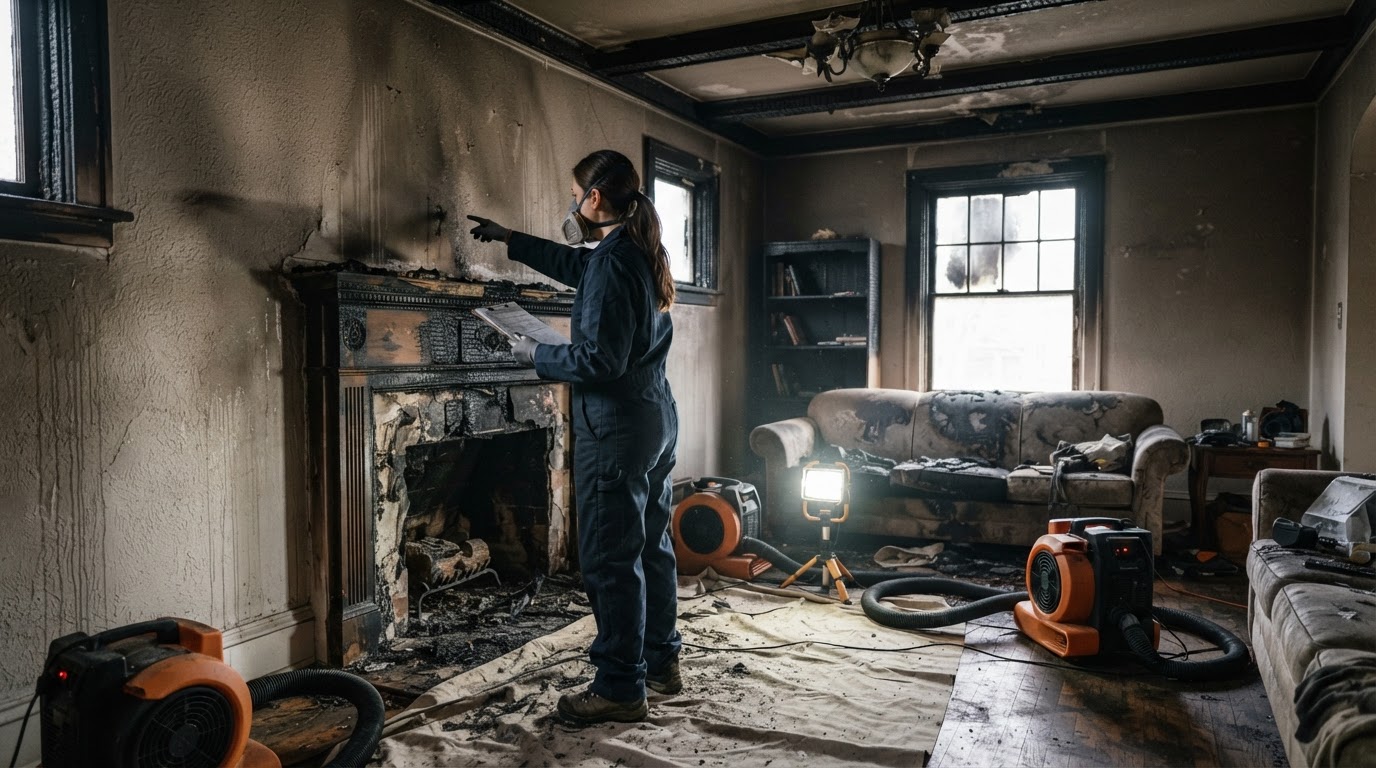
Direct heat and flame damage affects the materials the fire physically reached — charred framing, burned finishes, and destroyed contents. But fire damage rarely stops there. Smoke residue can travel through the property and settle on surfaces in rooms that never burned, coating walls, ceilings, and belongings with a film that can be difficult to remove.
Soot is a finer residue that can penetrate porous materials and textiles, and it behaves differently depending on what burned and how hot the fire was. Odor from smoke can persist long after visible residue is cleaned, because odor-causing compounds can remain on or within affected materials. Water used during fire suppression adds another layer, creating a water damage situation that may require extraction and drying alongside the fire cleanup.
Openings and Specialized Situations
A fire can leave openings in the structure — broken windows, damaged doors, or compromised roof areas — that expose the property to weather and further damage. These openings may require temporary protection such as board-up or tarping while restoration is evaluated. Kitchen and appliance fires can also leave specific residue patterns related to grease or food materials that burned.
Different materials react differently to smoke and soot. Porous surfaces tend to absorb residue, while some synthetic materials can melt or release particularly stubborn staining. These differences influence how each surface and material is approached during cleanup.
Fire Damage Cleanup and Restoration Process
The fire restoration process is adapted to the type and extent of the damage. A typical sequence may include the following steps, adjusted based on conditions found on site.
Evaluate Affected Areas
The areas affected by fire, smoke, soot, and suppression water are identified so that the restoration approach can address each element of the loss.
Stabilize Exposed Property Areas
Where the fire left openings in the structure, temporary protection such as board-up or tarping may be used to help limit further damage while restoration is evaluated.
Address Suppression Water
If water from fire suppression is present, it is extracted and the affected materials are evaluated for moisture, since fire losses often include a separate water damage component.
Evaluate Smoke and Soot Residues
Smoke residue and soot are assessed across affected surfaces and materials, including areas far from the fire's origin where smoke may have traveled.
Clean Affected Surfaces and Materials
Affected surfaces and materials are cleaned where appropriate, with the approach tailored to the type of residue and the material involved.
Prepare for Restoration
Odor treatment and material evaluation are addressed, and the property is prepared for the next restoration or repair steps based on its condition.
Fire or smoke damage at your property? Call our Winter Haven restoration team.
Call 863-347-3029Fire and Smoke Restoration Near Winter Haven
Fire damage is one of the more complex restoration situations because it typically involves multiple types of damage at once — burn, smoke, soot, odor, and water. Addressing only the visible burn damage while overlooking smoke residue, trapped soot, or suppression water can leave significant issues behind. A coordinated approach that evaluates all of these elements helps ensure the property is addressed comprehensively.
For Winter Haven property owners, understanding that fire restoration extends beyond the burned area helps set realistic expectations. Smoke can affect rooms that never caught fire, soot can settle into materials throughout the property, and odor can persist after surfaces look clean. Each of these is addressed as part of the restoration process.
Related services include smoke damage cleanup and odor removal, soot damage cleanup, emergency board-up services, kitchen, appliance and grease fire restoration, and water damage restoration for suppression water.
Serving Winter Haven
From Winter Haven to homes and businesses across surrounding Polk County and Central Florida communities, Onsite Mitigation and Restoration Inc provides access to water, fire, smoke, storm and related restoration services.
863-347-3029Fire Damage Restoration FAQs
What should I do after a house fire?+
After a house fire, do not enter the property until appropriate authorities indicate that entry is safe. Limit contact with soot and residue, and avoid disturbing affected areas. Contact a restoration company to evaluate the fire, smoke, soot, and any water damage from suppression. Consider documenting visible damage for your insurance carrier.
What does fire damage restoration include?+
Fire damage restoration includes evaluating the affected areas, stabilizing exposed openings, addressing smoke and soot residue, treating odor, mitigating water from fire suppression where present, and evaluating affected materials and contents. It addresses the full range of fire-related damage — burn, smoke, soot, odor, and water — rather than only the directly burned materials.
Can smoke affect rooms that were not directly burned?+
Yes. Smoke can travel through a property and settle on surfaces in rooms that never caught fire, coating walls, ceilings, and belongings with residue. This is why fire damage restoration evaluates the full property for smoke and soot, not only the area where the fire occurred.
Why is soot difficult to clean?+
Soot can penetrate porous materials and textiles, and it can smear or set into surfaces if cleaned incorrectly. Different materials react differently to soot, and the type of soot varies depending on what burned. These factors make soot cleanup a careful, material-specific process rather than a simple wipe-down.
Can firefighting water cause additional damage?+
Yes. Water used during fire suppression can create a separate water damage situation, saturating flooring, drywall, and other materials. Fire damage restoration often includes water extraction and drying alongside smoke and soot cleanup, since the water component needs to be addressed to prevent further moisture migration.
When is board-up service needed after a fire?+
Board-up service is used when a fire leaves openings in the structure — such as broken windows, damaged doors, or compromised wall or roof areas — that expose the property to weather and further damage. Temporary board-up helps protect the exposed areas while the next restoration steps are evaluated.
Can smoke odors remain after visible cleanup?+
Yes. Smoke odor can persist after visible residue is cleaned because odor-causing compounds can remain on or within affected materials. Odor treatment is addressed as part of fire damage restoration, though results can vary depending on the extent of the smoke and the materials involved.
Does fire restoration include kitchen fires?+
Yes. Kitchen, appliance, and grease fires are addressed as part of fire damage restoration. These fires can leave specific residue patterns related to grease or food materials, and the cleanup approach is tailored to the type of fire and the materials affected.
Need Fire Damage Restoration in Winter Haven?
Contact Onsite Mitigation and Restoration Inc to discuss your property and next-step restoration needs. Our team is ready to help you take the next step.
Request Restoration Help
Tell us about your property and the damage. We'll review your request and reach out.