Winter Haven, FL Restoration Services
Smoke Damage Cleanup & Smoke Odor Removal in Winter Haven, FL
Smoke damage cleanup and smoke odor removal services in Winter Haven, FL — focused on smoke migration, residue, and persistent odor.
Smoke damage is a distinct concern from direct fire damage. Even when flames are contained to one area, smoke can migrate throughout a property, leaving residue on surfaces, settling into porous materials, and creating odor that lingers long after the fire is out. Onsite Mitigation and Restoration Inc helps Winter Haven property owners address smoke residue and the odor it leaves behind.
This page focuses specifically on smoke migration, residue, and odor — the elements that often extend a fire loss well beyond the burned area. For the broader fire restoration process, see our fire damage restoration services.
Why Smoke Damage Can Spread Beyond the Fire Area
Smoke moves. Driven by heat and air currents, it can travel from the fire's origin into adjacent rooms, through ceiling and wall cavities, and into areas of the property that never directly burned. As it moves, smoke deposits residue on surfaces and penetrates porous materials, which is why smoke damage often appears far from where the fire started.
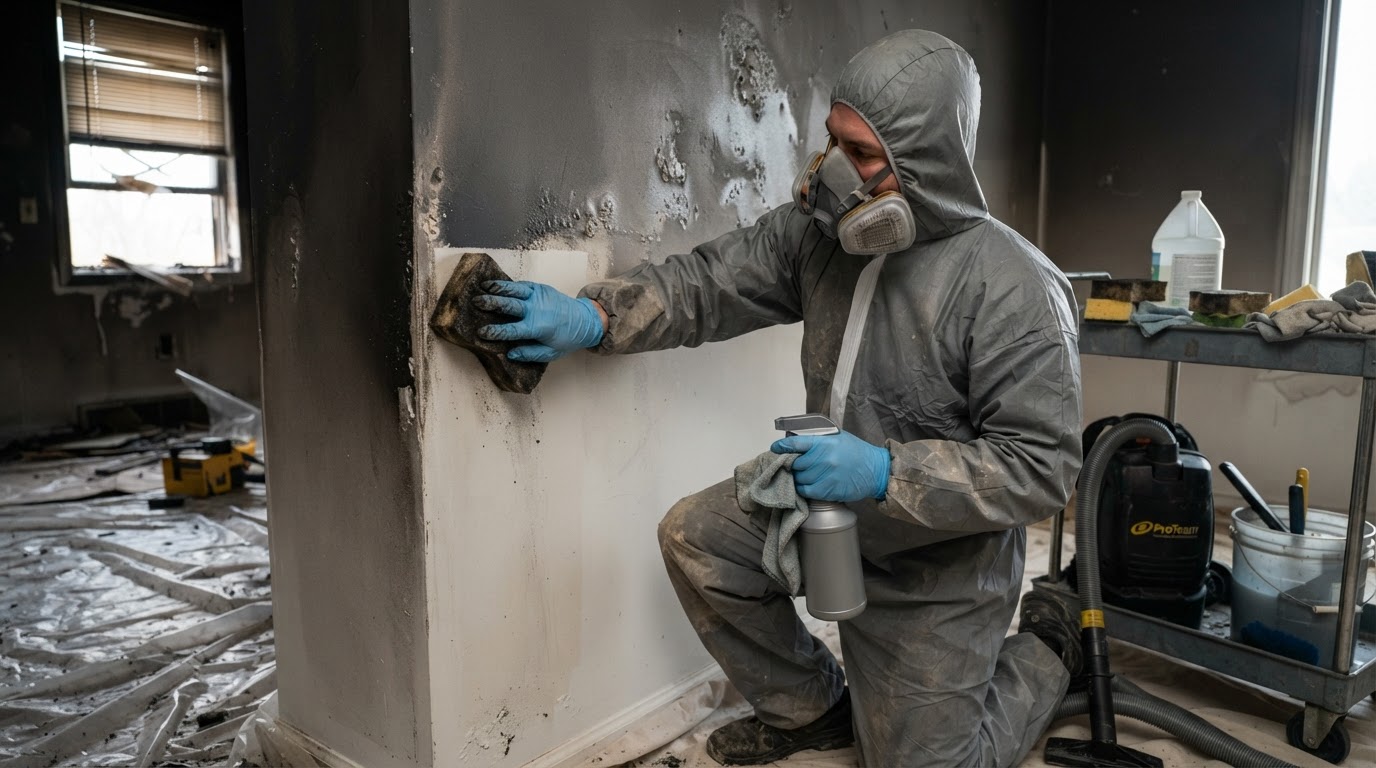
Smoke can affect a wide range of materials and areas. Walls and ceilings can develop visible staining. Cabinetry and trim can collect residue on and behind their surfaces. Textiles — including upholstery, curtains, and carpet — can absorb smoke and hold odor. Porous materials throughout the property can retain residue and odor-causing compounds that are not removed by surface cleaning alone.
In general terms, smoke can also move through HVAC-associated areas as air circulates through the property. This is why smoke damage is evaluated across the full property rather than only in the room where the fire occurred. The extent of smoke migration determines how broadly cleanup and odor treatment need to be applied.
Why does smoke odor remain after a fire?
Types and Signs of Smoke Damage
Recognizing Smoke Damage
Smoke damage can take several forms. Visible smoke staining appears as discoloration on walls, ceilings, and other surfaces, often yellowed or darkened depending on what burned. A finer soot-like residue can settle across surfaces and belongings, sometimes in areas far from the fire. Discoloration of plastics, painted surfaces, and textiles can also indicate smoke exposure.
Persistent odors are one of the most common signs of smoke damage, and they can remain even after visible residue has been cleaned. That is because odor-causing compounds can penetrate porous materials and continue to release odor over time. Residue on surfaces, affected porous materials, and a general smoky smell throughout the property are all indicators that smoke damage is present.
Smoke vs. Soot
Smoke damage and soot are related but not identical. Smoke refers broadly to the airborne residue and odor that travel through the property during and after a fire. Soot is the specific fine residue that settles on surfaces. Smoke damage cleanup addresses both the broader residue and odor, while soot cleanup focuses on the settled residue itself. In practice the two often overlap and are addressed together.
The type of residue and how it behaves depends on what burned and how hot the fire was. Different materials produce different residues, which is why smoke cleanup is tailored to the specific situation rather than handled with a single uniform approach.
Smoke Cleanup and Odor Removal Process
The smoke cleanup process is adapted to the extent of smoke migration and the materials affected. A typical sequence may include the following stages.
Evaluate Smoke-Affected Areas
The areas affected by smoke migration are identified across the property, including rooms and materials far from the fire's origin where residue and odor may be present.
Identify Damaged Surfaces and Materials
Surfaces and materials with visible residue, staining, or odor are identified, with attention to porous materials that may have absorbed smoke.
Address Loose Residue
Loose smoke residue on surfaces is addressed where appropriate to remove the material that can continue to spread or release odor.
Clean Affected Surfaces and Materials
Affected surfaces and materials are cleaned using approaches tailored to the type of residue and the material involved, since different surfaces react differently to smoke.
Perform Odor Treatment
Odor-treatment procedures appropriate to the situation are applied to address the odor-causing residues that remain on or within affected materials.
Evaluate Restoration Needs
The property is evaluated for any remaining restoration needs, and materials that could not be adequately cleaned are identified for further attention.
Smoke or fire odor problems? Call our Winter Haven restoration team.
Call 863-347-3029Smoke Damage Restoration Near Winter Haven
Smoke damage, soot, and odor are closely related elements of a fire loss, and understanding how they connect helps explain why smoke cleanup is a distinct process. Fire damage restoration addresses the overall loss, while smoke damage cleanup focuses specifically on the residue and odor that migrate beyond the burned area. Soot cleanup addresses the settled residue. Together these services form a coordinated approach to fire-related damage.
For Winter Haven property owners, the key insight is that smoke can affect the entire property — not only the room where the fire occurred. Evaluating the full extent of smoke migration, rather than assuming damage is limited to the fire area, helps ensure that residue and odor are addressed wherever they have traveled.
Related services include fire damage restoration, soot damage cleanup, kitchen fire restoration, emergency board-up services, and water damage restoration when fire suppression water is present.
Serving Winter Haven
From Winter Haven to homes and businesses across surrounding Polk County and Central Florida communities, Onsite Mitigation and Restoration Inc provides access to water, fire, smoke, storm and related restoration services.
863-347-3029Smoke & Odor Removal FAQs
Why does smoke smell stay in a house after a fire?+
Smoke smell stays because odor-causing residues can remain on or within affected materials even after the visible fire is out and surfaces appear clean. Smoke penetrates porous materials and settles throughout the property, and those trapped residues continue to release odor. Removing the smell requires addressing the residue within the materials, not only the visible surfaces.
Can smoke damage rooms that never caught fire?+
Yes. Smoke travels through a property driven by heat and air currents, and it can settle on surfaces and penetrate materials in rooms far from the fire's origin. This is why smoke damage is evaluated across the full property, since rooms that never burned can still have residue, staining, and odor.
Is smoke residue the same as soot?+
They are related but not identical. Smoke refers broadly to the airborne residue and odor that travel through the property during and after a fire. Soot is the specific fine residue that settles on surfaces. Smoke damage cleanup addresses both the broader residue and odor, while soot cleanup focuses on the settled residue itself. The two often overlap and are addressed together.
Can painting over smoke damage eliminate the odor?+
Painting over smoke damage typically does not eliminate the odor, because odor-causing residues can remain within or behind the painted surface and continue to release odor over time. Sealing smoke residue without addressing it can trap the problem. Proper smoke cleanup addresses the residue and odor within the affected materials before any refinishing.
Can smoke odor get into porous materials?+
Yes. Smoke penetrates porous materials such as upholstery, carpet, drywall, and other textiles and surfaces, and the odor-causing compounds can remain within them after the visible residue is cleaned. Addressing odor in porous materials is a key part of smoke damage cleanup, since surface cleaning alone may not reach what has been absorbed.
How is smoke damage cleaned?+
Smoke damage is cleaned by evaluating the full extent of smoke migration, addressing loose residue, cleaning affected surfaces and materials with approaches tailored to the residue type, and applying odor-treatment procedures to address trapped residues. The process is adapted to the materials involved, since different surfaces react differently to smoke.
Does smoke cleanup happen separately from fire damage restoration?+
Smoke cleanup is often a focused component within the broader fire damage restoration process. While this page addresses smoke migration, residue, and odor specifically, in practice smoke cleanup is coordinated with soot cleanup, odor treatment, and any water mitigation from suppression as part of the overall restoration effort.
Do you provide smoke damage cleanup around Winter Haven?+
Onsite Mitigation and Restoration Inc provides smoke damage cleanup and odor removal in Winter Haven and serves surrounding Central Florida communities. If your property is outside Winter Haven, contact our team to discuss your location and smoke damage cleanup needs.
Need Smoke Damage Cleanup or Odor Removal in Winter Haven?
Contact Onsite Mitigation and Restoration Inc to discuss your property and next-step restoration needs. Our team is ready to help you take the next step.
Request Restoration Help
Tell us about your property and the damage. We'll review your request and reach out.