Winter Haven, FL Restoration Services
Emergency Roof Tarping Services in Winter Haven, FL
Emergency roof tarping services in Winter Haven, FL — temporary roof protection to help reduce additional rain and weather exposure after storm, wind, or property damage.
Storm damage, high winds, and fallen debris can damage roofing materials and create openings that allow water to enter a property. Onsite Mitigation and Restoration Inc provides emergency roof tarping in Winter Haven to help temporarily cover damaged roof areas until permanent roof repair and restoration can be completed.
Roof tarping is temporary mitigation, not a permanent roof repair. A tarp helps reduce additional rain exposure and limit further water intrusion while the condition of the roof is evaluated and permanent repairs are planned. It is often paired with interior water damage mitigation when water has already entered the structure.
What Does Emergency Roof Tarping Do?
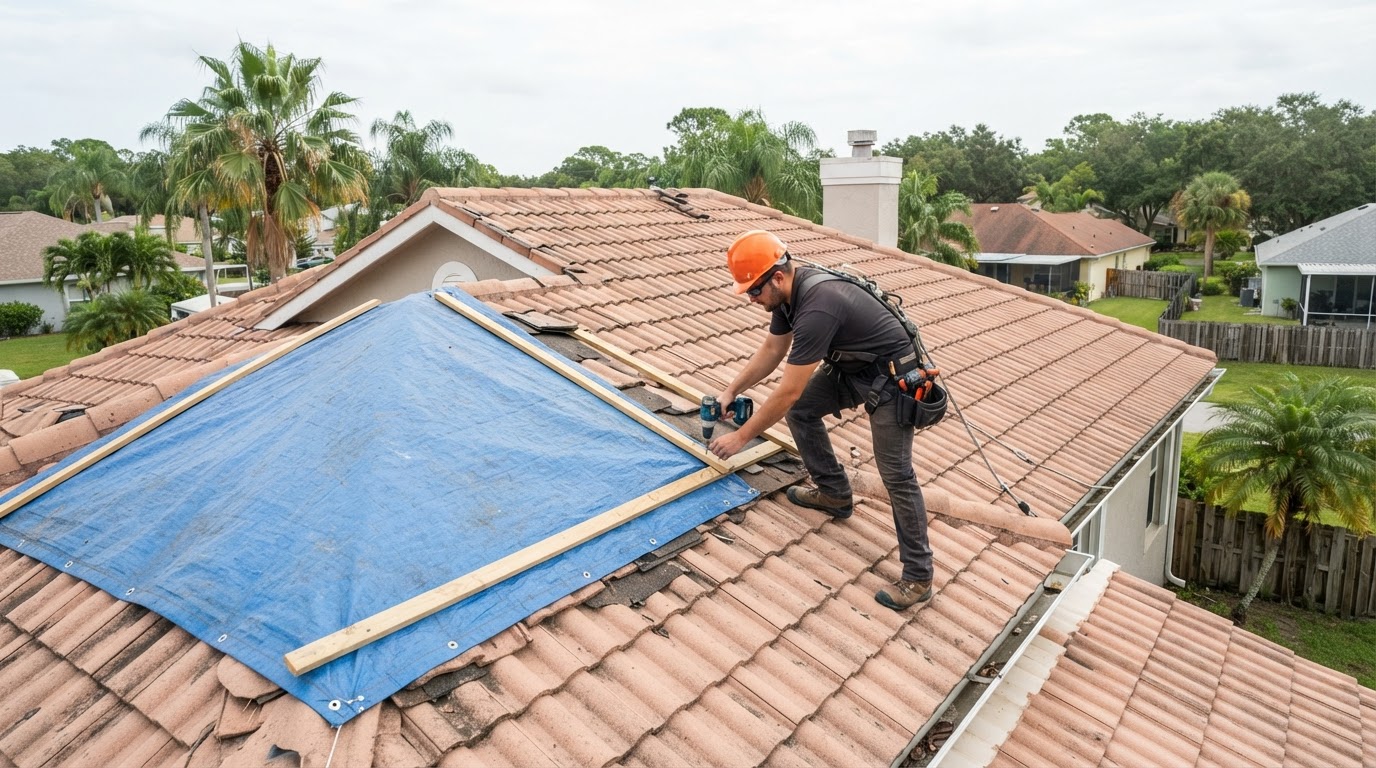
Emergency roof tarping temporarily covers a damaged portion of a roof to help reduce additional rain and weather exposure until permanent repairs can be completed. When wind lifts shingles, debris punctures the roof surface, or a storm creates an opening, rain can travel directly into the attic, ceilings, walls, and living spaces below.
A properly secured tarp creates a temporary barrier over the damaged area. It does not restore the roof — the underlying damage still requires evaluation and permanent repair by the appropriate roofing professional. What tarping does is help limit how much additional water enters the property during the period between damage and repair.
In Central Florida, where heavy rain, thunderstorms, and tropical weather are common, even a small roof opening can allow a significant amount of water inside over a short period. Roof tarping is often one of the first stabilization actions after storm damage, coordinated with interior water extraction and structural drying when water has already migrated into the building.
What does emergency roof tarping do?
When Might a Roof Need Emergency Tarping Near Winter Haven?
Storm and Wind Damage
Wind damage is one of the most common reasons a roof needs temporary tarping. High winds can lift, crack, or remove shingles and roofing materials, exposing the underlayment and structure beneath. Storm damage during thunderstorms and tropical weather can create multiple points of vulnerability across a roof surface in a single event.
Debris Impact and Roof Openings
Fallen branches, windborne debris, and impact during severe weather can puncture roofing materials and create openings. Missing shingles or roofing materials after a storm, visible damage to roof penetrations, and active roof leaks following a weather event are all signs that temporary tarping may be appropriate. An active leak inside the property after a storm can indicate roof damage that warrants evaluation.
When to Seek Evaluation
Any visible roof damage, missing materials, or interior leak following storm or wind activity should be evaluated. The exact roof condition cannot be determined without inspection, and damaged areas can allow water to enter even when the damage is not immediately obvious from inside the property. Safety is a priority — damaged roofs can be unstable and should be evaluated by appropriate personnel rather than accessed by homeowners.
Emergency Roof Tarping and Water Mitigation Process
Depending on the extent of roof damage and whether water has entered the property, the process may include the following steps. Safety is prioritized throughout, and the approach is adjusted based on conditions found on site.
Evaluate Visible Roof Damage
Where safely accessible, the damaged roof area is evaluated to identify openings requiring temporary protection. Not all damage is visible from the ground, and access is approached with attention to safety.
Determine Areas Requiring Protection
The sections of roof needing temporary coverage are identified and prioritized. Areas with active leaks or exposed underlayment generally take precedence to help limit additional water entry.
Install Temporary Roof Covering
A temporary tarp is installed over the damaged area as appropriate, secured to help resist wind and weather in the interim. The tarp is a temporary measure until permanent roof repair can be completed.
Evaluate Interior Water Intrusion
The interior is assessed for water that may have entered through the damaged roof — including attics, ceilings, walls, and flooring. Water intrusion is documented so mitigation can be planned.
Begin Water Mitigation if Needed
If water has entered the property, water extraction and drying are coordinated alongside the tarping. Addressing both the roof opening and the interior moisture helps limit further damage.
Plan Next Restoration Steps
Once the roof is temporarily protected and interior water is addressed, the property is prepared for permanent roof repair and any additional restoration work needed.
Storm damage or roof leak? Call our Winter Haven restoration team.
Call 863-347-3029Storm Roof Tarping Services Near Winter Haven
Central Florida weather brings heavy rain, thunderstorms, wind, and tropical weather that can damage roofs and create openings. In Winter Haven and surrounding Polk County communities, roof tarping is frequently needed after storm events that lift roofing materials or deposit debris onto roof surfaces. Temporary tarping helps bridge the gap between storm damage and permanent roof repair.
Roof tarping is distinct from permanent roof repair. A roofing professional is typically needed to correct the underlying roof defect, while Onsite Mitigation and Restoration Inc addresses the temporary protection and any interior water damage that resulted. Depending on the situation, both services may be needed.
Related services include storm and hurricane damage restoration, roof leak, ceiling and wall water damage cleanup, water damage restoration, structural drying, and emergency board-up for damaged vertical openings.
Is a roof tarp a permanent repair?
Serving Winter Haven
From Winter Haven to homes and businesses across surrounding Polk County and Central Florida communities, Onsite Mitigation and Restoration Inc provides access to water, fire, smoke, storm and related restoration services.
863-347-3029Emergency Roof Tarping FAQs
What is emergency roof tarping?+
Emergency roof tarping is the temporary installation of a protective covering over a damaged portion of a roof to help reduce additional rain and weather exposure. It is a temporary mitigation measure used after storm, wind, or debris damage until permanent roof repair can be completed.
Is a roof tarp a permanent repair?+
No. A roof tarp is temporary. It helps limit additional water intrusion, but the underlying roof damage still requires permanent repair by the appropriate roofing professional. Tarping bridges the gap between damage and repair.
When should a storm-damaged roof be tarped?+
A storm-damaged roof should generally be tarped as soon as possible after damage is identified, particularly when rain is in the forecast. Missing shingles, visible openings, debris impact, or an active interior leak after a storm all indicate that temporary tarping may be appropriate.
Can roof damage cause water to spread into walls or ceilings?+
Yes. Water entering through a damaged roof can travel through attic materials, along framing, into ceilings and wall cavities, and down into flooring. The visible interior stain may not show the full path of moisture, which is why interior water damage is evaluated alongside roof tarping.
Should I climb onto my roof to install a tarp myself?+
No. Damaged roofs can be unstable, and accessing them presents serious safety risks, especially after a storm. Roof evaluation and tarp installation should be handled by appropriate personnel with the proper equipment rather than by homeowners.
What happens if rain enters before the roof can be repaired?+
If water has already entered the property, interior water mitigation — including water extraction and structural drying — is coordinated alongside the tarping. Addressing both the roof opening and the interior moisture helps limit further damage to ceilings, walls, and flooring.
What is the difference between tarping and board-up?+
Roof tarping covers damaged roof areas, while board-up covers vertical openings such as broken windows and doors. A property may need both after a severe storm or fire. Both are temporary stabilization measures rather than permanent repairs.
Can roof tarping be combined with water damage mitigation?+
Yes. When water has entered through a damaged roof, tarping and interior water mitigation are typically coordinated together. The tarp helps limit additional water entry while extraction and drying address the moisture that has already reached the interior.
Need Emergency Roof Tarping in Winter Haven?
Contact Onsite Mitigation and Restoration Inc to discuss your property and next-step restoration needs. Our team is ready to help you take the next step.
Request Restoration Help
Tell us about your property and the damage. We'll review your request and reach out.