Winter Haven, FL Restoration Services
Flood Damage Cleanup in Winter Haven, FL
Flood damage cleanup services for homes and businesses in Winter Haven, FL — water removal, drying, and material evaluation after larger-volume water intrusion.
Flood damage cleanup addresses the aftermath of larger-volume water entering a property — whether from heavy rainfall, storm-driven water, drainage failures, plumbing failures, or overflowing fixtures. Unlike a small, contained leak, flooding often affects multiple rooms, saturates a wide range of building materials, and can involve water that has migrated well beyond the original entry point.
Onsite Mitigation and Restoration Inc helps Winter Haven property owners manage flood cleanup through water removal, affected-area assessment, drying, and material evaluation. The source of the water matters: outside floodwater and certain types of contaminated water require different precautions than a clean plumbing-water loss, and the cleanup approach is adjusted accordingly.
What Does Flood Damage Cleanup Involve?
Flood damage cleanup is the process of removing floodwater from a property, assessing the affected materials, drying the structure, and preparing it for restoration. Because flooding typically involves a larger volume of water than an ordinary leak, the process places emphasis on identifying how far water has migrated and which materials have been affected across multiple areas.
A flood cleanup generally begins with an initial evaluation of the source and extent of the water, followed by water removal from flooring and saturated materials. The affected areas are then assessed for moisture migration, and drying and dehumidification are directed at the structure. Cleaning and material evaluation follow, with restoration planning based on the condition of what remains.
The source of the floodwater shapes the approach. Water from a clean plumbing failure is handled differently than water that entered from outside, which may carry soil, debris, or contamination. Not all floodwater is sewage, but outside floodwater and certain wastewater situations do require additional precautions and a more careful cleaning process. Identifying the source early helps determine the right path forward.
How is flood cleanup different from ordinary water cleanup?
Common Sources of Flood Damage Near Winter Haven
Where Floodwater Comes From
In the Winter Haven area, flood damage can result from heavy rainfall, storm-driven water, and tropical weather that pushes water into structures through roofs, walls, and openings. Roof damage during storms can allow significant water intrusion into ceilings and interior spaces. Drainage failures around a property can direct water toward the foundation and into the structure.
Not all flooding comes from outside. Plumbing failures, burst pipes, overflowing fixtures, and appliance failures can release enough water to flood rooms and saturate flooring, drywall, and belongings. A water heater or supply-line failure, for example, can flood an area quickly. These indoor sources are generally clean-water situations, which affects how the cleanup is approached.
Materials and Areas Commonly Affected
Flooding can affect a wide range of building materials and areas. Flooring — including carpet, hardwood, laminate, and tile — often absorbs water first, along with the subfloor beneath. Drywall and baseboards can wick moisture upward, while cabinetry, furniture, and belongings in the affected rooms may be saturated. Wall cavities and insulation, where present, can also hold moisture that is not visible from the surface.
Because floodwater spreads across and beneath surfaces, the full extent of affected materials is assessed rather than assumed from what is visible. Identifying all the areas that absorbed water is central to a complete flood cleanup.
Flood Cleanup and Drying Process
Flood cleanup follows a staged approach that is adjusted based on the source and extent of the water. A typical process may include the following steps.
Safety Evaluation
The property is evaluated for safety considerations, including electrical hazards and structural conditions, before cleanup work begins. If the water may be contaminated, additional precautions are identified.
Source Identification
The source of the floodwater is identified so that the appropriate cleanup approach can be determined. Outside floodwater and contaminated sources are handled differently than clean plumbing water.
Water Extraction
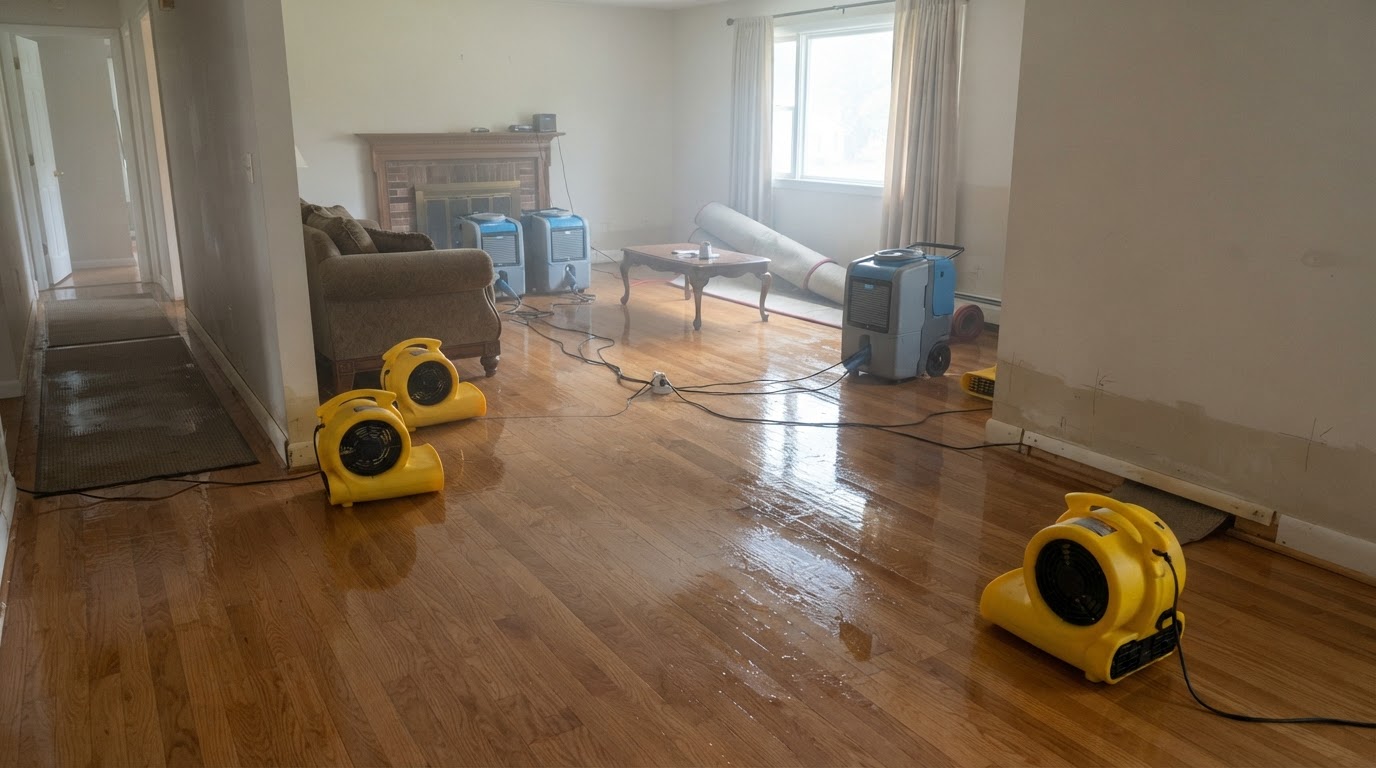
Standing and excess water is removed from flooring and saturated materials using extraction equipment so that drying can begin.
Moisture Assessment
Moisture is evaluated in areas where water may have migrated — beneath flooring, behind baseboards, inside wall cavities — to identify the full scope of affected materials.
Drying and Dehumidification
Air movement and dehumidification are directed at the affected materials to reduce remaining moisture, with progress monitored over time.
Cleanup and Next Restoration Steps
Affected materials are evaluated, affected areas are cleaned where appropriate, and the property is prepared for the next restoration or repair steps.
Flood damage at your property? Call our Winter Haven restoration team.
Call 863-347-3029Flood Restoration Services for Winter Haven Properties
Central Florida's climate brings heavy rain, thunderstorms, and tropical weather that can contribute to water intrusion in Winter Haven properties. Flood cleanup addresses both the obvious water and the moisture that migrates into surrounding materials, because leaving residual moisture behind can allow it to continue spreading and affecting the structure.
The source of the water influences the approach. A clean indoor plumbing failure is handled as a standard water loss, while outside floodwater — which may carry soil, debris, or contamination — requires a more careful cleaning process. In some cases, porous materials that absorbed contaminated water may need to be removed rather than dried in place. Making this distinction early helps ensure the cleanup matches the situation.
Related services include water extraction services, water damage restoration, structural drying and dehumidification, storm and hurricane damage restoration, roof leak water damage cleanup, and sewage cleanup for contaminated situations.
Serving Winter Haven
From Winter Haven to homes and businesses across surrounding Polk County and Central Florida communities, Onsite Mitigation and Restoration Inc provides access to water, fire, smoke, storm and related restoration services.
863-347-3029Flood Damage Cleanup FAQs
What should I do after my home floods?+
After a flood, first avoid entering areas where electrical or structural hazards may be present, and avoid contact with water that may be contaminated. Limit foot traffic in affected areas to reduce the spread of moisture. Then contact a restoration company to begin water removal and drying as quickly as possible, and consider documenting visible damage for your insurance carrier.
How is flood cleanup different from normal water cleanup?+
Flood cleanup typically involves a larger volume of water, a wider range of affected materials, and more extensive moisture migration than a small leak. When the water came from outside or may be contaminated, additional cleaning precautions apply. Flood cleanup also places greater emphasis on identifying all affected areas across multiple rooms rather than a single contained spot.
Can floodwater get underneath flooring?+
Yes. Floodwater readily migrates beneath carpet, hardwood, laminate, and tile into the subfloor and padding. Because flooring can hide trapped moisture, the area beneath it is evaluated as part of flood cleanup rather than relying on the surface appearance alone.
Can drywall remain wet after floodwater is removed?+
Drywall can wick moisture upward and remain wet inside the wall even after standing water is extracted. Damp or stained baseboards and soft spots are common indicators. Affected drywall is assessed to determine whether it can be dried or whether sections need to be removed.
How do you dry a property after flooding?+
After excess water is extracted, air movement and dehumidification are directed at the affected materials to evaporate and remove remaining moisture. Drying progress is monitored over time, and the approach is adjusted based on which materials are wet and how deeply moisture has migrated. The timeline varies with conditions.
Does storm flooding require different precautions?+
Storm flooding often involves outside water that may carry soil, debris, or contamination, which requires a more careful cleaning process than a clean indoor plumbing loss. Porous materials that absorbed contaminated water may need to be removed rather than dried in place. The source of the water determines the precautions taken.
What materials are commonly affected by flooding?+
Flooring, subflooring, drywall, baseboards, cabinetry, and belongings in the affected rooms are commonly affected. Wall cavities and insulation, where present, can also hold hidden moisture. The full range of affected materials is assessed during flood cleanup rather than assumed from visible water alone.
Do you provide flood cleanup around Winter Haven?+
Onsite Mitigation and Restoration Inc provides flood damage cleanup in Winter Haven and serves surrounding Central Florida communities. If your property is outside Winter Haven, contact our team to discuss your location and cleanup needs.
Need Flood Damage Cleanup in Winter Haven?
Contact Onsite Mitigation and Restoration Inc to discuss your property and next-step restoration needs. Our team is ready to help you take the next step.
Request Restoration Help
Tell us about your property and the damage. We'll review your request and reach out.