Winter Haven, FL Restoration Services
Structural Drying & Dehumidification in Winter Haven, FL
Structural drying and dehumidification services for properties in Winter Haven, FL — addressing the moisture that remains inside building materials after water is removed.
Visible water removal is only part of water mitigation. After standing water is extracted, moisture often remains inside the building materials and the indoor environment. Structural drying addresses that residual moisture — the water held in drywall, framing, subflooring, flooring, and other materials that extraction equipment cannot directly reach.
Onsite Mitigation and Restoration Inc provides structural drying and dehumidification for Winter Haven properties as a key phase of the water mitigation process. The goal is to reduce remaining moisture to help limit further migration and prepare the property for the next restoration steps.
What Is Structural Drying?
Structural drying is the process of removing moisture from the building materials and indoor environment of a property after water damage. It relies on evaporation, controlled air movement, and humidity management to draw moisture out of wet materials and remove it from the air. The result is a drier structure that is better positioned for restoration.
Several factors work together during structural drying. Air movement increases evaporation from wet surfaces, dehumidification removes the moisture that evaporates into the air, and ongoing moisture assessment tracks how quickly materials are drying. Together these elements create the conditions that allow wet materials to release their moisture rather than holding onto it.
Structural drying is not the same as water extraction. Extraction removes the free water on and near surfaces; drying addresses the moisture that has absorbed into the materials themselves. Both are needed — extraction alone does not dry a property, because the moisture inside drywall, framing, and subflooring remains after the visible water is gone. That is why drying follows extraction as a distinct and essential phase.
What is structural drying?
Where Can Moisture Remain After Water Damage?
Materials That Hold Hidden Moisture
After water is extracted, moisture can remain in a range of building materials. Drywall can wick water upward and hold it inside the gypsum core. Wood framing can absorb moisture that affects its dimension and condition. Subflooring beneath finished flooring often stays wet after the surface appears dry, and flooring itself — whether hardwood, laminate, or other materials — can retain moisture below the visible surface.
Cabinetry, baseboards, and ceiling materials can also hold moisture, particularly when water originated above or behind them. Wall cavities and insulation, where present, can trap moisture that is not detectable from the surface. Because these areas are concealed, moisture is assessed using appropriate methods rather than relying on appearance alone.
Signs of Remaining Moisture
Signs that moisture may remain include dampness to the touch, swelling or warping of materials, discoloration or staining, soft or spongy spots in drywall or flooring, persistent moisture readings, and damp or musty odors. These indicators help identify where drying attention is needed, even in areas that look dry on the surface.
It is worth noting that a musty odor does not automatically indicate mold — it can also be a sign of residual moisture in materials. Either way, persistent odors after water damage warrant a closer evaluation of where moisture may remain so that drying can be directed appropriately.
Structural Drying and Dehumidification Process
The drying process is adapted to the materials and conditions of each property. A typical sequence may include the following steps, with equipment placement and drying time varying based on what is found on site.
Evaluate Affected Areas
The materials and areas affected by moisture are identified, including concealed spaces where water may have migrated, so that drying can be directed where it is needed.
Remove Excess Water First
Standing and excess water is extracted before drying begins, since drying is most effective once the free water has been removed from surfaces and saturated materials.
Establish Drying Conditions
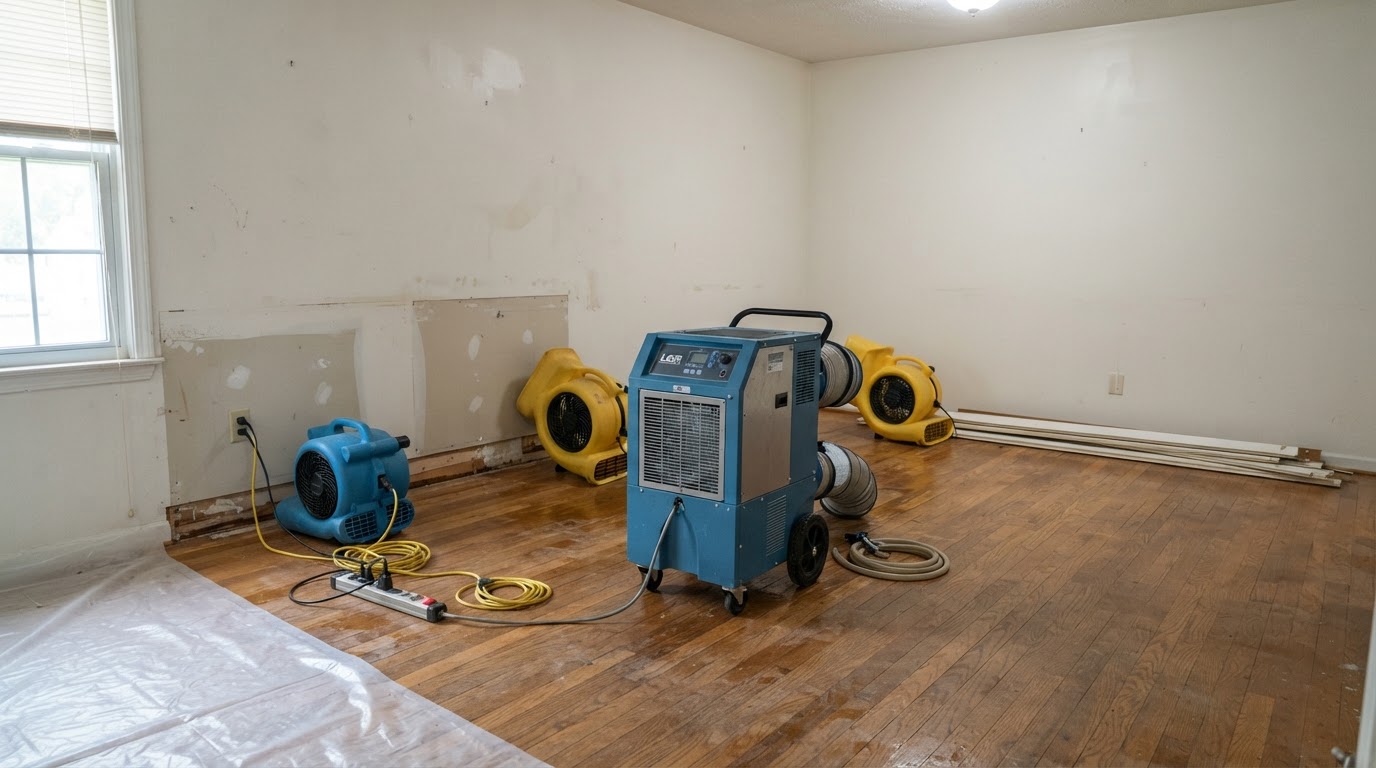
Air movement and dehumidification equipment are positioned to create the evaporation and humidity conditions that allow wet materials to release their moisture.
Use Air Movement and Dehumidification
Air movers increase evaporation from wet surfaces while dehumidifiers remove the moisture released into the air, maintaining conditions that continue drawing moisture out of materials.
Monitor Drying Progress
Moisture levels are monitored over time to track how quickly materials are drying and to adjust equipment placement or conditions as the drying progresses.
Determine Next Restoration Steps
Once materials have reached appropriate dryness, the property is evaluated for the next restoration or repair steps based on the condition of the structure.
Need professional drying after water damage? Call our Winter Haven team.
Call 863-347-3029Professional Property Drying Near Winter Haven
In Winter Haven and across Central Florida, warm temperatures and naturally high humidity can influence how materials dry and how moisture behaves inside a structure. High indoor humidity can slow evaporation, which is why dehumidification is a central part of structural drying in this climate rather than an optional addition. Managing the indoor environment helps create the conditions that allow wet materials to release moisture effectively.
Remaining moisture can delay restoration and allow it to continue migrating into surrounding materials if it is not addressed. Professional drying focuses on identifying where moisture remains — including concealed areas — and directing drying at those materials until appropriate dryness is reached. This helps prepare the property for the next steps rather than leaving hidden moisture behind.
Related services include water damage restoration, water extraction services, flood damage cleanup, burst pipe cleanup, and roof leak water damage cleanup.
How long does structural drying take?
Serving Winter Haven
From Winter Haven to homes and businesses across surrounding Polk County and Central Florida communities, Onsite Mitigation and Restoration Inc provides access to water, fire, smoke, storm and related restoration services.
863-347-3029Structural Drying FAQs
What is structural drying?+
Structural drying is the process of removing moisture from a property's building materials and indoor environment after water damage. It uses evaporation, controlled air movement, and dehumidification to draw moisture out of materials like drywall, framing, and subflooring. It follows extraction and addresses the moisture that remains inside materials after visible water is removed.
Why do you need dehumidifiers after water damage?+
Dehumidifiers remove the moisture that evaporates from wet materials into the air. Without dehumidification, that moisture stays in the indoor environment and slows evaporation, which is especially relevant in a humid climate like Central Florida. Dehumidification maintains the conditions that allow wet materials to continue releasing moisture.
Is water extraction enough to dry a property?+
No. Extraction removes free water on and near surfaces, but moisture remains inside drywall, framing, subflooring, and other materials after the visible water is gone. Structural drying is needed to address that residual moisture. Extraction and drying are both part of a complete approach, and skipping drying can leave hidden moisture behind.
How can moisture be trapped inside walls?+
Water can enter wall cavities through leaks, condensation, or migration from adjacent wet areas, and it can remain inside the drywall, insulation, and framing after the surface appears dry. Because wall cavities are concealed, moisture inside them is assessed using appropriate methods rather than relying on the visible surface.
How long does structural drying usually take?+
There is no fixed drying duration. It depends on how much water entered the property, which materials became wet, how deeply moisture migrated, and the indoor environmental conditions. Some situations dry within a few days, while others take longer. Drying progress is monitored and the timeline adjusted based on actual conditions.
Can hardwood floors hold moisture?+
Yes. Hardwood flooring can absorb moisture and hold it within the wood, which can cause cupping, warping, or other changes. Moisture can also reach the subfloor beneath. Hardwood floors are evaluated for moisture content and dried with appropriate methods, though the condition of the flooring influences whether it can be restored.
Do wet ceilings require drying?+
Yes. Ceilings can absorb water from leaks above and hold moisture in the drywall or ceiling materials. Wet ceilings are evaluated for moisture and dried where appropriate, though severely saturated ceiling materials may need to be removed depending on their condition and the extent of the moisture.
What happens after structural drying is complete?+
Once materials have reached appropriate dryness, the property is evaluated for the next restoration or repair steps. This may involve repairing or replacing materials that were removed, addressing finishes, and returning the property toward its pre-loss condition. Drying is one phase within the broader restoration process.
Need Professional Drying After Water Damage?
Contact Onsite Mitigation and Restoration Inc to discuss your property and next-step restoration needs. Our team is ready to help you take the next step.
Request Restoration Help
Tell us about your property and the damage. We'll review your request and reach out.