Winter Haven, FL Restoration Services
Soot Damage Cleanup & Removal in Winter Haven, FL
Soot damage cleanup and removal services for homes and businesses in Winter Haven, FL — addressing fine fire residue, smoke staining, and surface contamination after a property fire.
Soot is a fine residue produced during incomplete combustion, and after a fire it can settle on walls, ceilings, cabinetry, fixtures, and contents well beyond the area that actually burned. Onsite Mitigation and Restoration Inc helps property owners in Winter Haven address soot and related fire residue as part of the broader fire damage restoration process.
Soot cleanup is closely connected to smoke damage and fire damage restoration. The residue can stain surfaces, contribute to persistent odor, and affect porous materials in ways that ordinary household cleaning may not resolve. Proper cleanup depends on the type of residue, the affected materials, and the overall extent of the fire and smoke damage.
What Is Soot Damage and Why Does It Require Proper Cleanup?
Soot damage refers to the fine black, gray, or oily residue that settles on surfaces after a fire. Unlike a single burn mark, soot can travel through the air and deposit across rooms that never came into direct contact with flames. That migration is what makes soot cleanup a distinct concern within fire damage restoration — the visible fire may be small while the residue is widespread.
Different fires produce different residues. A fast-burning, oxygen-rich fire often leaves a dry, powdery soot that can sometimes be removed more readily, while a slower, smoldering or grease-related fire may leave a sticky, heavy residue that bonds to surfaces. Because the appropriate cleaning approach depends on the residue type and the material underneath, soot cleanup is generally evaluated surface by surface rather than treated with a single method.
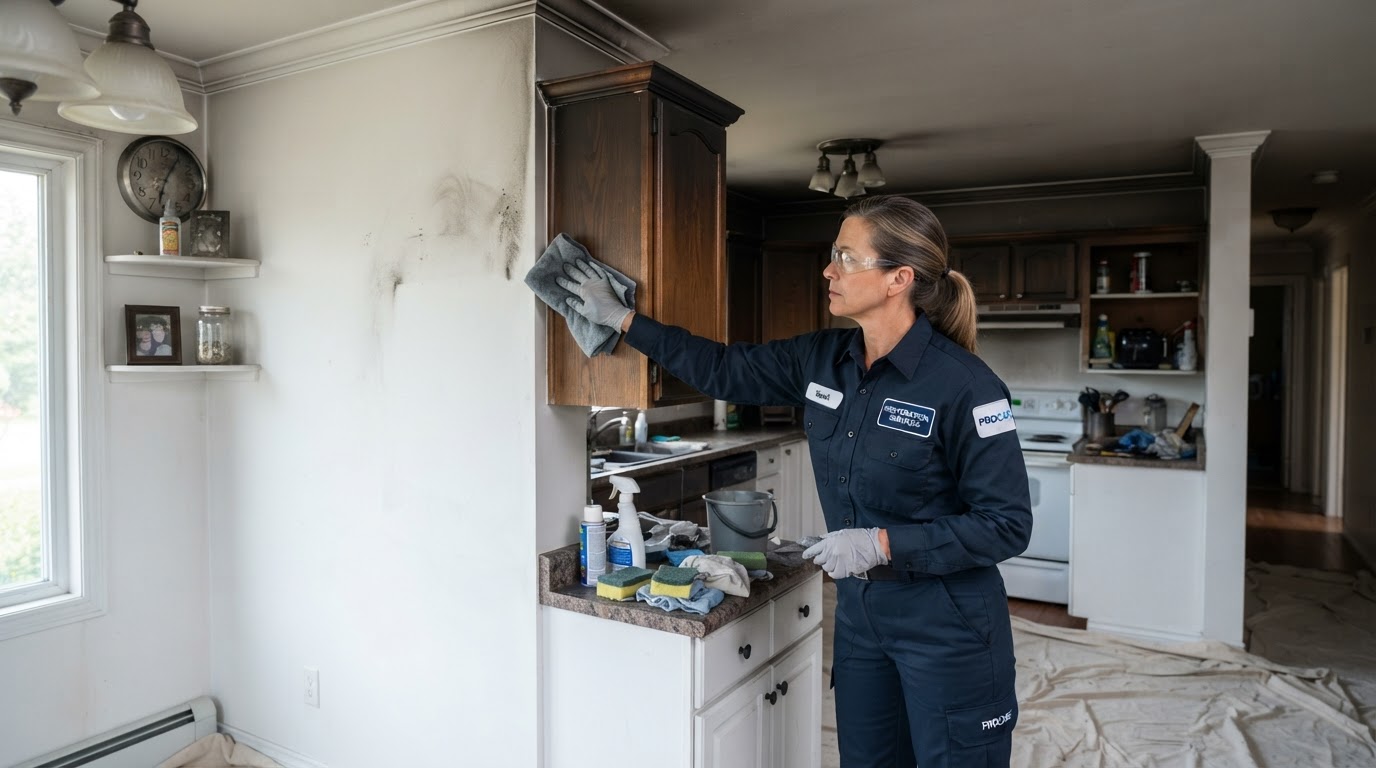
Improper cleaning can make the problem worse. Wiping certain residues with the wrong technique can smear them deeper into paint, drywall, wood, or textiles, driving staining into the material and complicating later restoration. Onsite Mitigation and Restoration Inc approaches soot damage as one part of a coordinated fire restoration effort, working alongside smoke odor removal and broader fire cleanup.
What is soot damage?
Common Signs of Soot Damage After a Fire
Visible Soot and Residue
The most obvious sign of soot damage is dark residue on surfaces. This can appear as black or gray deposits on walls, ceilings, and cabinetry, particularly near the fire source and along the paths smoke traveled. Residue often collects around vents, openings, and the upper portions of rooms, where rising smoke deposits particles before settling.
Discoloration and Staining
Soot can cause discoloration that becomes more noticeable over time. Yellowing on painted surfaces, darkened plastic or vinyl items, and staining on ceilings above a fire source are common. Porous materials — including drywall, untreated wood, fabrics, and upholstery — can absorb residue, which may make staining harder to remove the longer it remains.
Residue Away From the Fire Source
Because smoke moves through open spaces and air pathways, soot frequently appears in rooms far from the actual fire. Residue on contents in adjacent rooms, inside cabinets, or along hallway surfaces can indicate that smoke migrated beyond the burn area. A fire-related odor that lingers after visible cleanup can also point to residual soot or smoke residue trapped in porous materials.
How Professional Soot Cleanup Works
Depending on the type of fire, the residue involved, and the affected materials, the soot cleanup process may include the following steps. Not every surface or property follows an identical sequence.
Evaluate Fire- and Soot-Affected Areas
The property is assessed to identify where soot and smoke residue have settled, including areas beyond the immediate fire source. This helps determine the scope of cleanup and which materials are involved.
Identify Surface and Material Types
Different materials — painted drywall, wood cabinetry, metal, glass, textiles — respond differently to residue. Identifying the surface type helps determine a suitable cleaning approach for each area.
Determine a Suitable Cleaning Approach
Based on the residue type and material, an appropriate cleaning method is selected. Dry, powdery soot and heavy, sticky residue generally require different techniques to avoid driving residue deeper into surfaces.
Address Loose and Adhered Residue
Loose residue is addressed first to limit spread, followed by adhered residue on affected surfaces where appropriate. Cleaning is performed in a way intended to reduce smearing and further staining.
Evaluate Remaining Smoke Odor
After surface residue is addressed, remaining smoke odor or related contamination is evaluated. Odor treatment, where appropriate, is coordinated with the broader fire and smoke restoration process.
Prepare for Additional Restoration
Affected materials are evaluated to determine whether they can be cleaned or may require replacement. The property is prepared for the next restoration steps based on the condition of surfaces and contents.
Soot or fire residue at your property? Call our Winter Haven restoration team.
Call 863-347-3029Soot and Fire Residue Cleanup Near Winter Haven
Soot cleanup is one component of complete fire restoration. Addressing residue without also evaluating smoke odor, affected contents, and any water used during fire suppression can leave related issues unresolved. Onsite Mitigation and Restoration Inc coordinates soot cleanup with the broader restoration process so that surface residue, odor, and related damage are addressed together where appropriate.
In Winter Haven and across Central Florida, warm and humid conditions can influence how residue interacts with surfaces and how odors behave inside a property. Prompt, properly performed soot cleanup can help limit how deeply residue bonds to materials, which may support the overall restoration outcome.
Related services include fire damage restoration, smoke damage cleanup and odor removal, kitchen, appliance and grease fire restoration, and emergency board-up services when structural openings need temporary protection. If fire suppression water is involved, water damage restoration may also be needed.
Can I simply wipe soot off the walls?
Serving Winter Haven
From Winter Haven to homes and businesses across surrounding Polk County and Central Florida communities, Onsite Mitigation and Restoration Inc provides access to water, fire, smoke, storm and related restoration services.
863-347-3029Soot Damage Cleanup FAQs
What is soot?+
Soot is a fine residue created during the incomplete combustion of materials. After a fire, it can settle on walls, ceilings, cabinets, fixtures, and contents as a black, gray, or oily deposit. Because it travels with smoke, soot often appears in areas well beyond the actual burn location.
Is soot the same as smoke damage?+
They are related but distinct. Smoke damage refers broadly to the effects of smoke — including residue, staining, and odor — while soot specifically refers to the solid particulate residue that deposits on surfaces. Soot cleanup is one part of addressing overall smoke and fire damage.
Can soot spread to rooms where there was no fire?+
Yes. Smoke moves through open spaces, hallways, and air pathways, carrying soot particles with it. Residue can settle on surfaces and contents in rooms that never came into direct contact with flames, which is why soot cleanup often extends beyond the immediate fire area.
Can soot stain walls and ceilings?+
Soot can cause discoloration and staining on painted surfaces, ceilings, and cabinetry, particularly near the fire source and along the paths smoke traveled. Porous materials may absorb residue, which can make staining more difficult to address the longer it remains.
Why can soot be difficult to remove?+
Soot difficulty depends on the residue type and the surface. Heavy, sticky residue from slower or grease-related fires can bond to surfaces, and improper wiping can smear it deeper into paint or drywall. Matching the cleaning method to the residue and material is central to effective removal.
Can soot cause lingering fire odors?+
Residual soot and smoke residue trapped in porous materials can contribute to persistent fire-related odor even after visible surfaces appear clean. Odor evaluation and treatment, where appropriate, are typically coordinated with soot cleanup as part of the broader fire restoration process.
Does soot cleanup happen before repainting?+
In most cases, soot and smoke residue should be addressed before repainting, because painting over residue can trap odor and staining beneath the new paint surface. The condition of the underlying material is evaluated to determine whether cleaning is sufficient or whether replacement is more appropriate.
When should professional soot cleanup be considered?+
Professional soot cleanup is generally considered after any fire that produced visible residue, smoke staining, or lingering odor — including small or contained fires. Because soot can migrate beyond the burn area and bond to surfaces, a professional evaluation helps identify the full extent of affected materials.
Need Soot Damage Cleanup in Winter Haven?
Contact Onsite Mitigation and Restoration Inc to discuss your property and next-step restoration needs. Our team is ready to help you take the next step.
Request Restoration Help
Tell us about your property and the damage. We'll review your request and reach out.