Service Area — Lake Hamilton, FL
Water, Fire & Property Damage Restoration in Lake Hamilton, FL
Onsite Mitigation and Restoration Inc provides water, fire, smoke, storm, and property damage restoration services to property owners in Lake Hamilton, Florida. A small lakeside community in Polk County, Lake Hamilton properties face the same plumbing failures, roof exposures, storm intrusion, and fire risks found across Central Florida.
From our Winter Haven base, our restoration team serves Lake Hamilton with water extraction, structural drying, smoke and soot cleanup, roof tarping, board-up, and related mitigation services. After any property loss, the priority is evaluating what the building has sustained and limiting additional damage.
Water Damage • Fire Damage • Smoke • Storm • Tarping • Board-Up
Water Damage Restoration in Lake Hamilton, FL
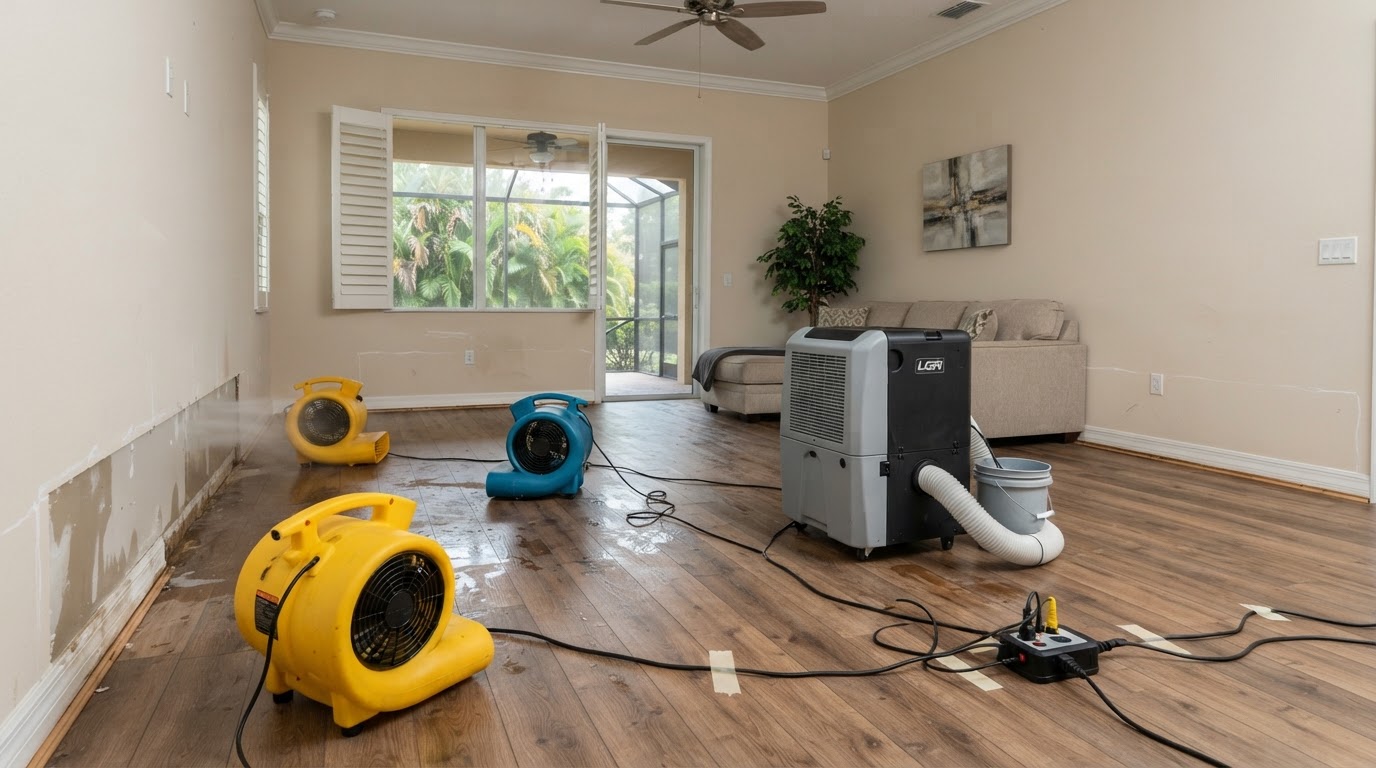
Water damage in a Lake Hamilton property can begin with a plumbing leak, a burst pipe, an appliance supply-line failure, a roof leak, or storm-driven rain. Water extraction and structural drying are central restoration needs here — once water enters, it migrates beneath flooring, into drywall and baseboards, inside wall cavities, and into cabinetry and subflooring, so the visible water is often only part of the affected area.
Water damage restoration targets that full path of moisture. After the source and extent are evaluated, excess water is extracted, hidden moisture is assessed, and drying and dehumidification are directed at the affected materials. The approach is matched to the source — a clean plumbing leak, a roof leak, contaminated water, or storm flooding each require different handling. Because drying is such a prominent need here, see our structural drying and dehumidification and water removal and extraction.
For plumbing-source losses, a plumber may repair the failed component while our team handles the moisture damage. See our water damage restoration, burst pipe and plumbing leak cleanup, and flood damage cleanup. When water is contaminated, our sewage backup and black water cleanup applies additional precautions, and roof-related interior damage is addressed through our roof leak, ceiling and wall water damage cleanup.
What does water damage restoration include in Lake Hamilton?
Water damage restoration may include water extraction, moisture assessment, structural drying, cleanup, and preparation for repairs depending on the source and extent of the damage. The process is adjusted based on whether the water came from a clean plumbing leak, a roof leak, contaminated water, or storm flooding.
Water damage at a Lake Hamilton property? Speak with our restoration team.
Call 863-347-3029Fire and Smoke Damage Restoration in Lake Hamilton
Fire damage in a Lake Hamilton property typically extends beyond the burned area. Smoke travels through open spaces and air pathways, depositing soot on walls, ceilings, cabinetry, and contents in rooms that did not burn. Smoke odor can penetrate porous materials and linger after visible residue is cleaned, and water used during firefighting can add a separate moisture concern. Fire damage restoration addresses these layers together.
After an evaluation, the process may include stabilizing exposed openings, addressing suppression water, cleaning soot and smoke residue from affected surfaces, and treating odor. The cleaning approach depends on what burned and how far the residue traveled. Because fire cleanup here often overlaps with water extraction — when suppression water is involved — the two are coordinated rather than handled separately.
Our fire damage restoration services coordinate the full response. For residue and odor, see our smoke damage and odor removal and soot damage cleanup. Cooking fires are handled through our kitchen, appliance and grease fire restoration, and exposed openings can be secured with emergency board-up.
Can smoke damage affect rooms in Lake Hamilton that never caught fire?
Yes. Smoke travels through open spaces and air pathways, depositing soot and residue on surfaces in rooms that did not burn. Odor can also penetrate porous materials throughout the property, so fire restoration often treats the entire affected area rather than only the burn location.
Storm Damage Restoration Near Lake Hamilton, FL
Lake Hamilton's lakeside setting in Polk County places it in Central Florida's thunderstorm and tropical weather zone. Wind can damage roofing and break windows or doors, and storm-driven rain can enter through compromised roof areas or openings. Once water is inside, it can affect ceilings, walls, insulation, and flooring, and the damage often combines exterior exposure with interior water intrusion.
Temporary protection usually comes first. Emergency roof tarping temporarily covers a damaged roof section to reduce further rain entry, and emergency board-up secures damaged windows and doors. Both are temporary stabilization, not permanent repairs. Do not climb onto a damaged roof, and avoid downed electrical hazards or unstable structures.
After stabilization, our storm and hurricane damage restoration coordinates extraction and drying, and our roof leak, ceiling and wall water damage cleanup addresses interior damage from above. For larger water intrusion, see our flood damage cleanup.
Property Damage Mitigation Services in Lake Hamilton
These additional mitigation services address damage types that frequently accompany water, fire, and storm losses in Lake Hamilton. Each card links to a dedicated service page describing the approach in detail.
Structural Drying
Dehumidification and airflow to dry moisture trapped in building materials.
Learn moreWater Extraction
Removal of standing and excess water to allow drying to begin.
Learn moreFire Damage Restoration
Coordination of soot, smoke, odor, and suppression water cleanup.
Learn moreStorm Restoration
Coordinated mitigation after storm and hurricane property damage.
Learn moreRoof Leak Water Damage
Interior drying for ceiling and wall damage from roof leaks.
Learn moreFlood Damage Cleanup
Cleanup and drying after larger-volume water intrusion.
Learn moreHow Property Damage Mitigation Works in Lake Hamilton, FL
The restoration process is shaped by the specific loss, so it varies from one project to the next. Most mitigation work, though, follows a recognizable path from first contact toward preparation for recovery.
Mitigation refers to actions that limit or stabilize additional damage — removing water, controlling moisture, and protecting exposed areas. Restoration is the broader effort of returning affected areas toward their pre-loss condition, which may involve repairs handled separately. Mitigation generally comes first.
- 1
Contact the Restoration Team
Lake Hamilton property owners describe the damage — source, affected areas, and timing — so the team can prepare for evaluation.
- 2
Evaluate the Source and Extent
The source is identified and the full scope of damage is assessed, including moisture or residue that has migrated beyond the visible area.
- 3
Mitigate or Stabilize
Water is extracted, exposed openings are temporarily protected, and conditions are stabilized to limit further loss.
- 4
Dry, Clean or Treat
Drying, dehumidification, soot and smoke cleaning, and odor treatment are applied to affected materials as appropriate.
- 5
Prepare for the Next Steps
Affected materials are evaluated and the property is prepared for the next restoration or repair steps.
The restoration process depends on the source of damage, the affected materials, the moisture or residue present, safety conditions, and the overall condition of the property. The approach is adjusted based on what evaluation reveals rather than following an identical sequence.
Restoration Services for Homes and Businesses in Lake Hamilton
Lake Hamilton is a small lakeside Polk County community near Winter Haven. Its properties experience the same water, fire, and storm risks as the rest of Central Florida, and because water extraction and drying are frequent needs here — whether from a plumbing leak or storm intrusion — those services receive particular attention. Onsite Mitigation and Restoration Inc serves Lake Hamilton from our Winter Haven base.
The service links below connect to detailed pages for each restoration category available to Lake Hamilton properties. If your home or business has sustained damage, contact our team to discuss the situation and the appropriate next steps.
Restoration Services Available in Lake Hamilton
Other Areas We Serve
Frequently Asked Questions About Restoration Services in Lake Hamilton, FL
How does water extraction work in a Lake Hamilton property?+
Water extraction uses specialized equipment to physically pull standing and excess water out of flooring and saturated materials. It is typically one of the first active steps after the source and extent of water are evaluated, and it prepares the property for structural drying.
What is structural drying?+
Structural drying uses controlled air movement and dehumidification to remove moisture that remains in building materials — drywall, framing, subflooring, and cabinetry — after visible water is removed. Drying time depends on how much water entered, which materials are wet, and indoor conditions.
Can water damage spread behind walls in Lake Hamilton?+
Yes. Water can enter wall cavities through leaks or migration from adjacent wet areas and remain behind drywall after visible water is gone. Damp baseboards, staining, or soft drywall can indicate hidden moisture, and affected wall cavities are assessed as part of a thorough evaluation.
Do you provide fire and smoke damage restoration in Lake Hamilton?+
Yes. Fire and smoke damage restoration is available to Lake Hamilton properties. The process may include smoke and soot cleanup, odor treatment, addressing suppression water, and temporary board-up of exposed openings depending on the extent of the fire damage.
Why can smoke odor remain after a fire in Lake Hamilton?+
Smoke odor lingers because odor-causing residues remain on and within porous materials — drywall, cabinetry, upholstery — even after visible soot is cleaned. Those residues continue to release odor until they are treated, which is why odor removal is often a separate step from surface cleaning.
When is emergency roof tarping used in Lake Hamilton?+
Roof tarping is used when storm or wind damage creates an opening or missing roofing that allows rain to enter. The tarp temporarily covers the damaged area to reduce additional water exposure until permanent roof repair can be completed. It is not a permanent repair.
What is the difference between mitigation and restoration?+
Mitigation refers to actions that limit or stabilize additional damage — removing water, controlling moisture, and protecting exposed areas. Restoration is the broader work of returning affected areas toward their pre-loss condition, which may include repairs and reconstruction. Mitigation generally comes first.
Do you serve Lake Hamilton from your Winter Haven location?+
Yes. Onsite Mitigation and Restoration Inc is based in Winter Haven and serves Lake Hamilton and surrounding Polk County communities. The business location is Winter Haven, FL 33884, and Lake Hamilton is part of the surrounding service area.
Need Property Damage Restoration in Lake Hamilton, FL?
If your Lake Hamilton home or business has sustained water, fire, smoke, storm, or related property damage, Onsite Mitigation and Restoration Inc is ready to help evaluate the situation and discuss next steps. Contact our team to begin the mitigation process.
Onsite Mitigation and Restoration Inc — Serving Lake Hamilton, FL
Business location: Winter Haven, FL 33884
office@onsitemitigation.com