Winter Haven, FL Restoration Services
Kitchen Fire, Appliance Fire & Grease Fire Damage Restoration in Winter Haven, FL
Kitchen, appliance and grease fire damage restoration in Winter Haven, FL — addressing soot, smoke, odor, and residue from cooking-related fires.
Cooking fires, grease fires, stove fires, oven fires, and appliance fires can cause damage that extends well beyond the burned area. Even a contained kitchen fire can produce smoke, soot, and odor that migrate into adjacent rooms and settle on surfaces throughout the property. Onsite Mitigation and Restoration Inc helps Winter Haven property owners address kitchen fire damage and its related effects.
Kitchen fire restoration typically combines several concerns: burned materials and cabinetry, smoke residue on walls and ceilings, soot deposits, persistent odor, and sometimes water or extinguisher-related cleanup. The approach depends on the type of fire, the materials affected, and how far smoke and residue have migrated.
Kitchen Fire Damage Can Extend Beyond the Burn Area
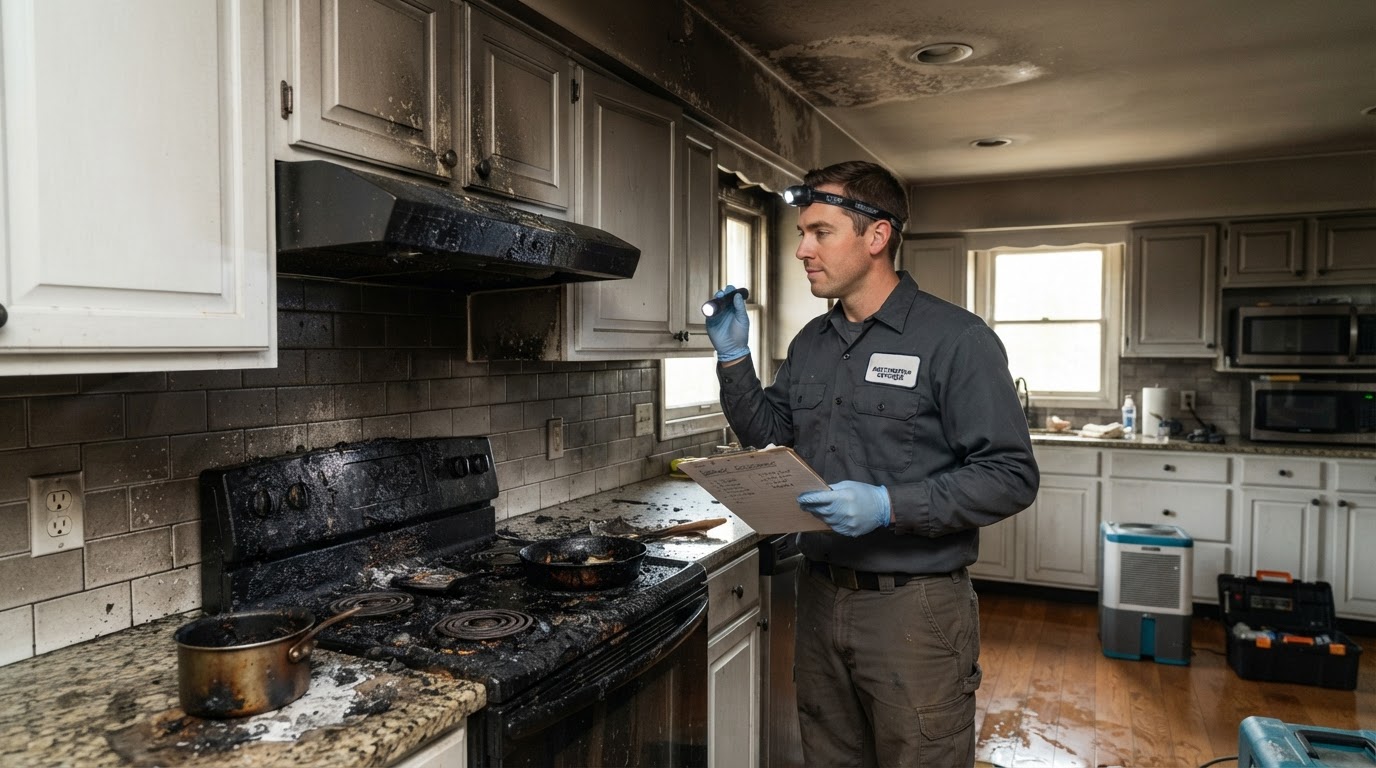
A kitchen fire often causes more damage through smoke and soot than through direct burning. Grease fires in particular can produce a heavy, sticky residue that bonds to cabinetry, countertops, walls, and ceilings. Because kitchens are connected to the rest of the home through open spaces and air pathways, smoke can migrate into adjacent rooms, depositing residue on surfaces and contents far from the stove or oven where the fire started.
The affected materials in a kitchen fire can include cabinetry, walls, ceilings, countertops, backsplashes, and nearby contents. Burned cabinetry may require replacement, while smoke-stained walls and ceilings may be candidates for cleaning depending on the residue type and how deeply it has bonded. Soot deposits on contents and fixtures are evaluated as part of the overall scope.
Odor is a separate but related concern. Smoke odor can linger in porous materials — fabrics, upholstery, and certain building materials — even after visible residue has been cleaned. Where water or extinguishing agents were used to control the fire, additional cleanup and drying may be needed alongside the fire and smoke restoration work.
What does kitchen fire damage restoration include?
Common Types of Kitchen and Appliance Fire Damage
Types of Kitchen Fires
Grease fires are among the most common kitchen fires and can produce a heavy, oily residue that adheres strongly to surfaces. Stovetop fires, oven fires, and small appliance fires can each produce different residue patterns depending on what burned and how completely. Electrical appliance incidents, discussed only in general terms, can also result in localized burn damage and smoke.
Typical Damage
Damage from a kitchen fire can include burn residue on the stovetop and surrounding area, smoke staining on walls and ceilings, soot deposits on cabinetry and contents, and persistent odor. Cabinetry near the fire source may be charred or heat-damaged, while finishes on adjacent surfaces may be discolored by smoke. The extent depends on how quickly the fire was contained and how far smoke traveled.
Migration Beyond the Kitchen
Smoke from a kitchen fire can move through hallways and open spaces into living areas, bedrooms, and other rooms. Residue on contents, walls, and ceilings in these areas is common even when the fire itself was small and contained. A lingering odor throughout the property can indicate that smoke migrated beyond the kitchen, which is why the full scope is evaluated rather than only the immediate burn area.
Kitchen Fire Cleanup and Restoration Process
Depending on the type of fire, the residue involved, and how far smoke migrated, the kitchen fire cleanup process may include the following steps. The approach is adjusted based on the materials and conditions found on site.
Wait Until the Area Is Safe to Enter
A fire-damaged kitchen should not be entered until appropriate authorities indicate that entry is safe. Structural, electrical, and residual hazard concerns are evaluated before any restoration work begins.
Evaluate Burned and Smoke-Affected Areas
The kitchen and adjacent rooms are assessed to identify burned materials, smoke staining, soot deposits, and odor. The evaluation extends beyond the kitchen to capture smoke migration into other areas of the property.
Identify Soot and Residue Migration
The type of residue — whether dry and powdery or heavy and sticky from a grease fire — is identified, along with the surfaces and contents affected. This helps determine the appropriate cleaning approach for each material.
Clean Salvageable Affected Surfaces
Where appropriate, smoke and soot are cleaned from salvageable surfaces using methods suited to the residue and material. Material condition determines whether cleaning is sufficient or whether replacement is more appropriate.
Address Smoke Odor
Persistent smoke odor is addressed as appropriate to the situation. Odor treatment is coordinated with the cleaning work, since residue trapped in porous materials can continue to produce odor after visible surfaces are cleaned.
Prepare for Repairs and Restoration
Burned cabinetry, damaged finishes, and any water or extinguisher-related damage are evaluated. The property is prepared for the next repair and restoration steps based on the condition of the kitchen and affected adjacent areas.
Kitchen fire damage at your property? Call our Winter Haven restoration team.
Call 863-347-3029Kitchen Fire and Smoke Cleanup Near Winter Haven
Kitchen fires are among the most common residential fire events, and their effects can be surprisingly widespread. In Winter Haven and across Central Florida, a contained cooking fire can still produce smoke, soot, and odor that affect multiple rooms — which is why kitchen fire restoration is approached as a whole-property concern rather than only a stove-area cleanup.
The relationship between fire damage, smoke damage, soot, and odor means these concerns are often addressed together. Cleaning visible soot without addressing trapped odor, or replacing burned cabinetry without cleaning smoke-stained ceilings, can leave related issues unresolved. Onsite Mitigation and Restoration Inc coordinates the full scope of kitchen fire damage.
Related services include fire damage restoration, smoke damage cleanup and odor removal, soot damage cleanup, emergency board-up where structural openings exist, and water damage restoration where suppression water is involved.
Why can a small kitchen fire cause smoke damage in other rooms?
Serving Winter Haven
From Winter Haven to homes and businesses across surrounding Polk County and Central Florida communities, Onsite Mitigation and Restoration Inc provides access to water, fire, smoke, storm and related restoration services.
863-347-3029Kitchen / Appliance / Grease Fire FAQs
What should I do after a kitchen fire?+
First, ensure the fire is fully out and do not re-enter the kitchen until appropriate authorities indicate it is safe. Avoid using appliances or switches in the affected area. Once it is safe, contact a restoration company to evaluate the burn damage, smoke and soot residue, and any odor or water-related effects. Document visible damage when it is safe to do so.
Can smoke from a kitchen fire spread throughout the house?+
Yes. Smoke moves through open spaces, hallways, and air pathways, carrying soot and odor into rooms far from the kitchen. Even a small, contained cooking fire can deposit residue on walls, ceilings, and contents throughout the property, which is why kitchen fire restoration often extends beyond the kitchen itself.
How is grease-fire residue cleaned?+
Grease fires produce a heavy, sticky residue that bonds strongly to surfaces, and it generally requires a different cleaning approach than dry, powdery soot. The appropriate method depends on the residue type and the material underneath, since improper wiping can smear the residue deeper into surfaces. Cleaning is evaluated surface by surface.
Can cabinets be affected by smoke and soot?+
Yes. Cabinetry near the fire source may be charred or heat-damaged, while cabinets and finishes in adjacent areas can be discolored by smoke and coated with soot. The condition of each cabinet is evaluated to determine whether cleaning is sufficient or whether replacement is more appropriate.
Can a small appliance fire cause persistent odor?+
Yes. Even a small appliance fire can release smoke that deposits odor-causing residue in porous materials such as fabrics, upholstery, and certain building materials. Odor can linger after visible surfaces are cleaned, which is why odor treatment is coordinated with the smoke and soot cleanup process.
Is soot cleanup different from ordinary household cleaning?+
Yes. Ordinary household cleaning products and techniques are generally not suited to fire-related soot, and improper wiping can smear residue deeper into surfaces. Soot cleanup uses methods matched to the residue type and material, and is performed as part of the broader fire and smoke restoration process rather than as routine cleaning.
Can water used to extinguish a fire cause additional damage?+
Yes. Water or extinguishing agents used to control a kitchen fire can cause secondary water damage to flooring, cabinetry, and surrounding materials. When suppression water is present, water extraction and drying are coordinated alongside the fire, smoke, and soot cleanup to address both concerns.
When should professional kitchen fire restoration be considered?+
Professional kitchen fire restoration is generally considered after any cooking-related fire that produced visible burn damage, smoke staining, soot, or lingering odor — including small or contained fires. Because smoke can migrate beyond the kitchen and residue can bond to surfaces, a professional evaluation helps identify the full extent of affected materials.
Need Kitchen Fire Damage Restoration in Winter Haven?
Contact Onsite Mitigation and Restoration Inc to discuss your property and next-step restoration needs. Our team is ready to help you take the next step.
Request Restoration Help
Tell us about your property and the damage. We'll review your request and reach out.